Altitude's Grip on the Game: Performance Metrics in Andean Football Clubs
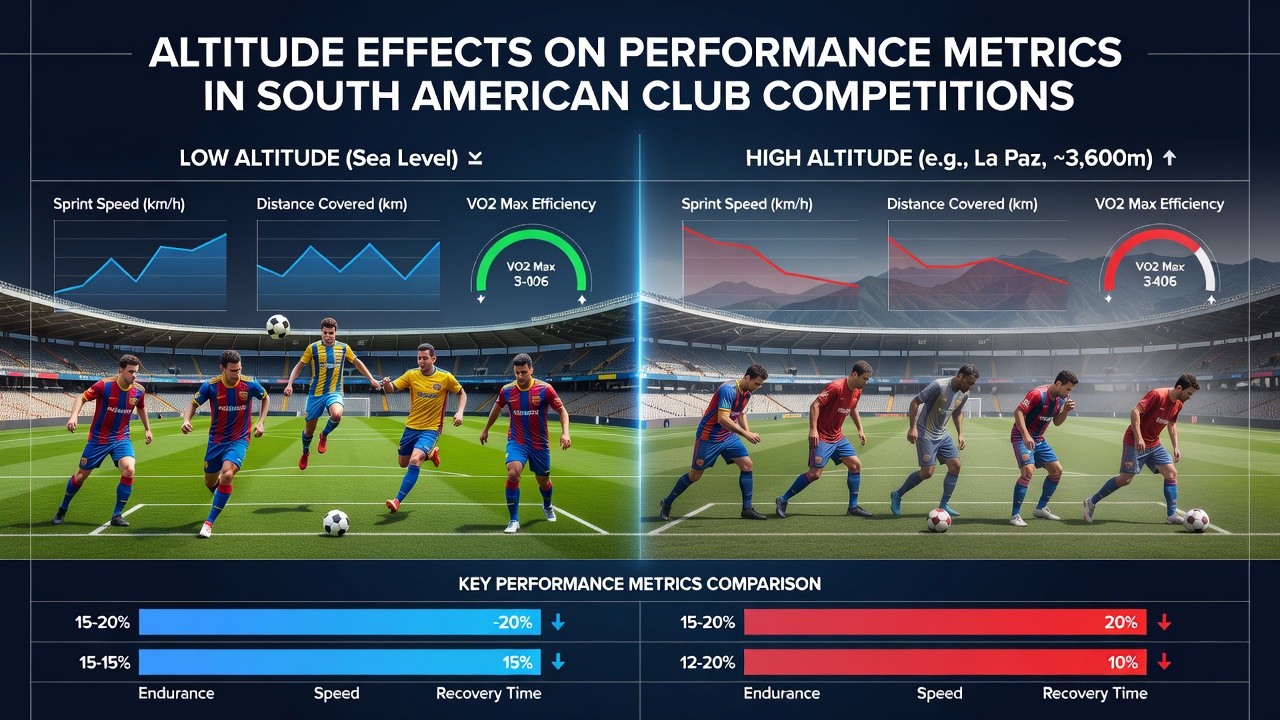
High-elevation venues across South America create measurable shifts in player output during club competitions, and data from Copa Libertadores fixtures illustrate these patterns clearly. Teams arriving from coastal or lowland regions encounter reduced oxygen availability above 2500 meters, which alters endurance, recovery intervals, and sprint frequency according to physiological studies conducted in Bolivia and Peru. Observers note that matches in La Paz at roughly 3600 meters above sea level produce distinct statistical profiles compared with games played nearer to sea level in Montevideo or Buenos Aires.
Physiological Pressures at Elevation
Lower partial pressure of oxygen forces the cardiovascular system to work harder even during moderate exertion, and researchers at institutions in the Andean region have documented corresponding drops in total distance covered by visiting players. Heart-rate data collected during matches shows sustained elevation, while repeated high-intensity efforts decline more rapidly after the initial 30 minutes. Acclimatization windows of five to seven days allow partial adaptation through increased red-blood-cell production, yet many club schedules compress travel and preparation time into shorter periods.
Passing accuracy and decision speed also register changes once altitude exceeds 3000 meters. Studies tracking GPS and optical tracking systems reveal that midfielders from non-acclimated squads complete fewer progressive passes in the second half, whereas local sides maintain steadier output because their training environments already incorporate similar conditions. Ball flight behaves differently as well, traveling farther and faster in thinner air, which influences set-piece execution and long-range shooting percentages.
Competition Data Across Venues
CONMEBOL records for the 2025 and early 2026 seasons show that home sides at the highest stadiums achieve higher average possession retention in the final 15 minutes of matches. Visiting teams from lower elevations record elevated fatigue markers, visible in reduced successful tackles and increased turnovers under pressure. One analysis of Estadio Hernando Siles encounters found a 12 percent reduction in total sprints by away squads after the 60-minute mark compared with their performances in neutral or sea-level venues.
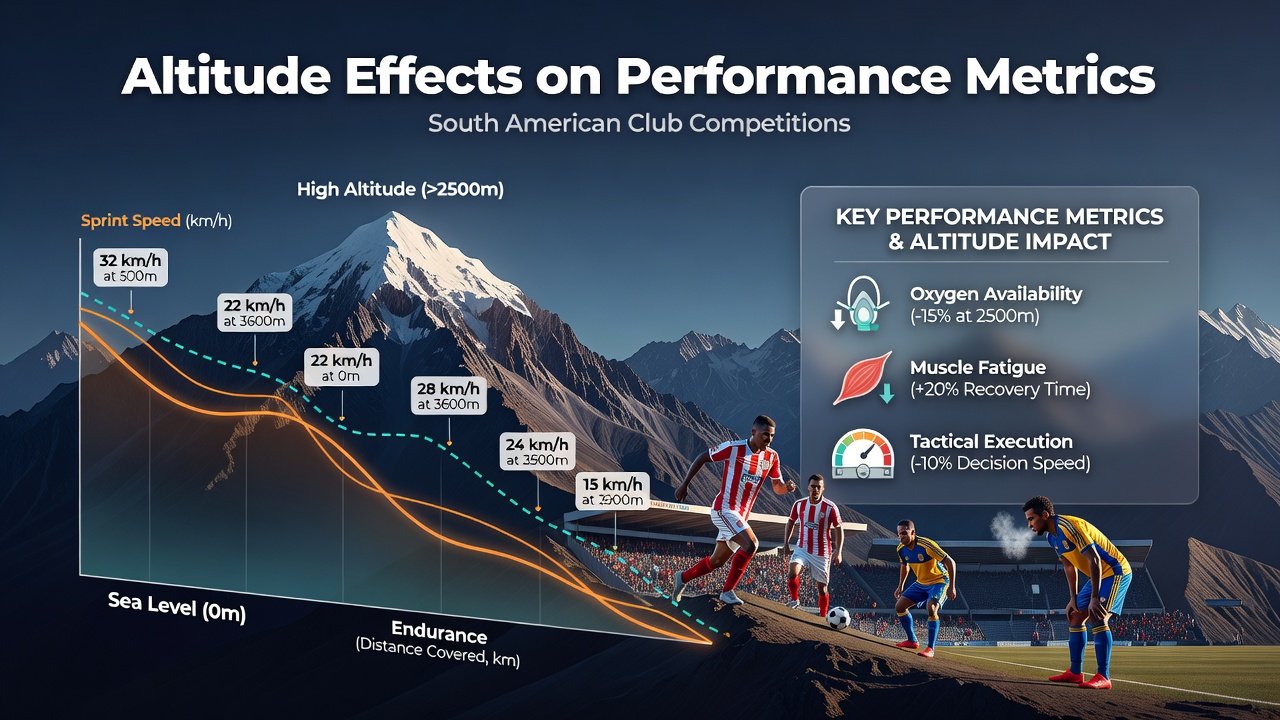
Teams such as Bolívar and The Strongest benefit from repeated exposure during domestic campaigns, while clubs from Brazil or Argentina must adjust training loads rapidly upon arrival. August 2026 fixtures already scheduled for the knockout stages include several high-altitude legs, prompting clubs to incorporate simulated hypoxic sessions in preparation. Performance dashboards compiled by league analysts indicate that goal tallies at altitude lean slightly lower in the first half yet rise again late when visiting defenses tire, producing distinct temporal distributions compared with lowland encounters.
Tracking Metrics and Adaptation Strategies
Modern monitoring tools now quantify these effects with greater precision. Wearable devices measure oxygen saturation and internal load, allowing medical staff to adjust substitution patterns. Clubs that rotate players more frequently at elevation preserve higher work rates across the full 90 minutes, according to aggregated competition figures. Recovery protocols that include controlled rehydration and nutritional timing further mitigate some performance decrements, although complete equalization remains impossible without extended residence at altitude.
Researchers affiliated with South American sports-science programs continue to examine how these venue-specific demands interact with tactical setups. Formations that emphasize short passing and positional compactness appear less disrupted than those relying on long transitions, because the latter require repeated maximal efforts that deplete glycogen stores faster in hypoxic conditions. Data from the 2024–2026 period shows measurable differences in expected-goal conversion rates when teams travel between extreme elevation differentials within a single week.
Conclusion
Performance metrics in South American club competitions reflect clear altitude-related patterns that clubs and analysts track through standardized data collection. Reduced oxygen availability drives measurable changes in distance covered, sprint volume, and late-match execution, while acclimatization and tactical adjustments provide partial mitigation. Ongoing monitoring in venues such as La Paz continues to refine understanding of these environmental influences on match outcomes.