Continental Commitments and Draw Patterns in Domestic Leagues: Examining Fatigue Effects
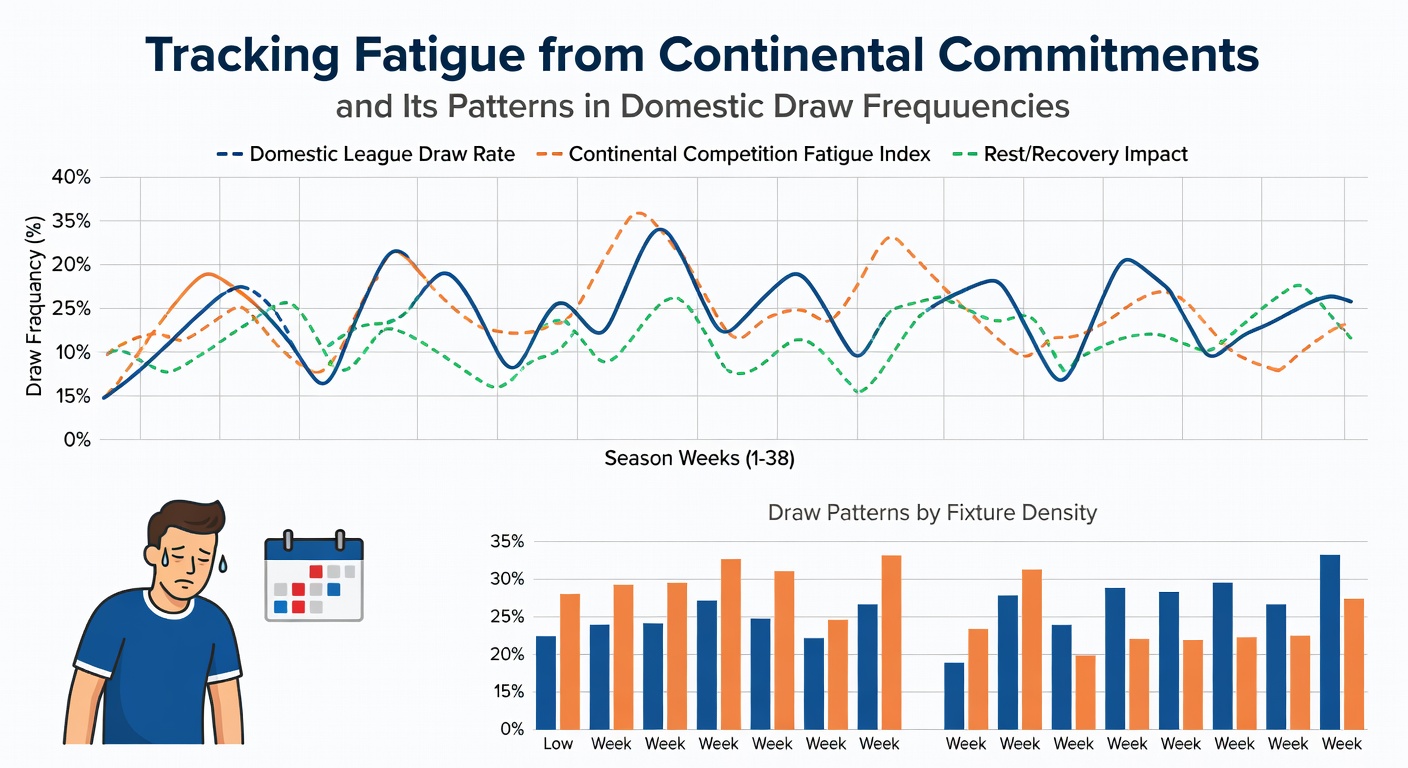
Teams balancing European campaigns with domestic schedules encounter increased fixture congestion, and researchers track how this load correlates with draw frequencies in home leagues. Data from multiple seasons show that clubs advancing deep into continental competitions experience measurable drops in win rates domestically, while draws become more common as energy reserves diminish.
Defining Continental Commitments and Their Scope
European competitions such as the UEFA Champions League, Europa League and Conference League add between six and thirteen extra matches per season for participating sides, and these fixtures often fall midweek. Domestic leagues meanwhile maintain their standard 34 to 38 game calendars, creating overlapping demands that stretch squad depth and recovery windows. Observers note that travel distances, time zone shifts and tactical preparation further compound physical and mental strain, particularly during winter months when pitches harden and temperatures drop.
How Fatigue Manifests in Match Statistics
Studies compiled by academic groups at universities across Europe indicate that teams with continental obligations record higher draw percentages in the 48 hours following a European fixture. Analysts examine metrics including total distance covered, high-intensity runs and pass completion rates, then cross-reference these against final scorelines. Results reveal a consistent uptick in stalemates, often because reduced pressing intensity allows opponents to maintain defensive structures more effectively.
Take one dataset covering the 2024-2025 campaign where clubs eliminated in the Champions League round of 16 showed a 4.2 percentage point rise in domestic draws compared with their pre-European averages. The same pattern repeated across several leagues when squads rotated key midfielders or relied on bench players for recovery purposes.
Patterns Observed Across Different Leagues
Domestic draw frequencies vary by competition style and fixture calendar. In leagues with Saturday-to-Wednesday turnarounds, the effect appears more pronounced than in those allowing longer rest periods. Spanish and Italian top-flight sides historically demonstrate elevated draw rates after continental involvement, whereas German clubs sometimes mitigate the impact through squad rotation enabled by larger benches.
Figures released ahead of June 2026 show that early eliminations from European events in spring allow teams to regain domestic rhythm, producing fewer draws in the final weeks of the season. Conversely, sides still active in May carry residual fatigue into title deciders and relegation battles, sustaining higher stalemate counts.
Tracking Methods Used by Analysts
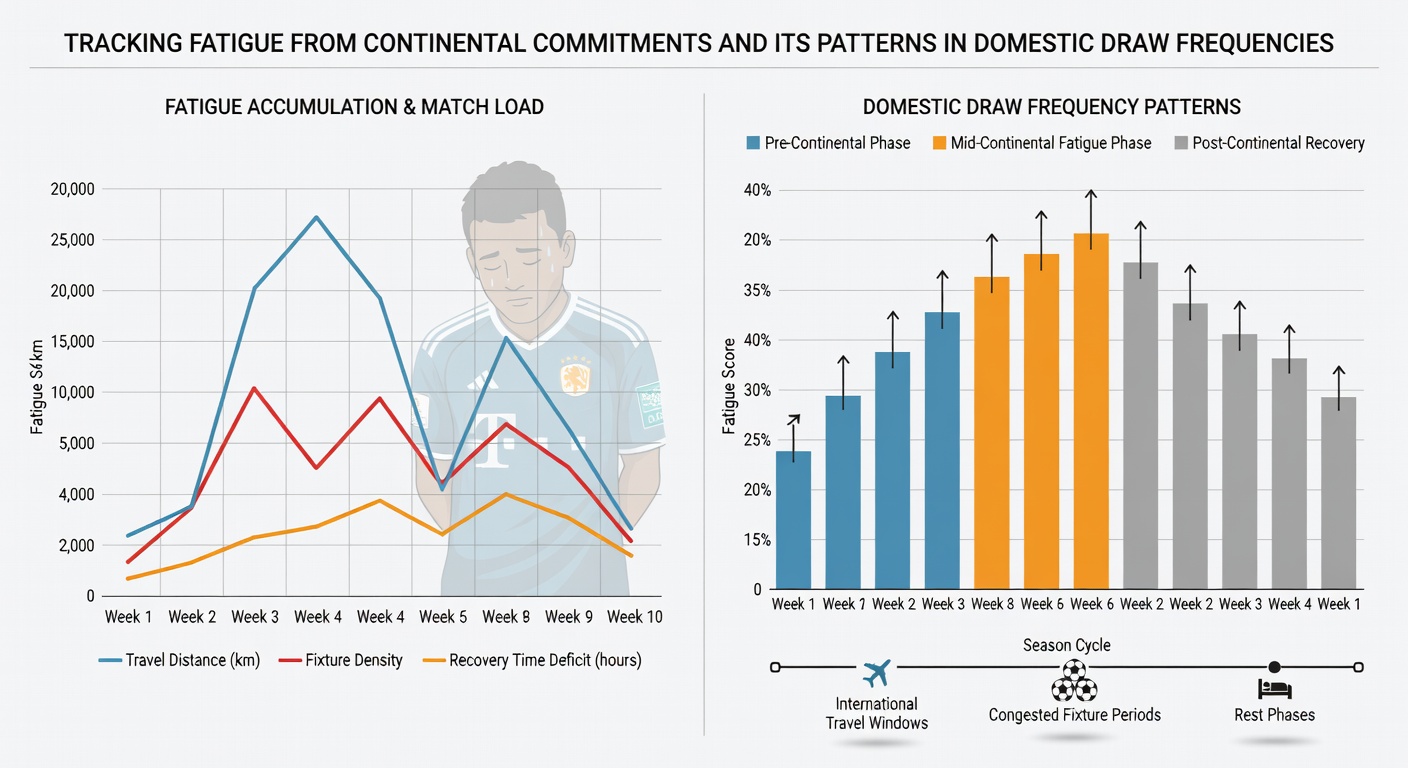
Performance analysts employ GPS tracking, heart-rate monitoring and video tagging to quantify fatigue loads. These tools feed into predictive models that flag elevated draw probabilities for specific fixture combinations. Industry reports from organizations such as the UEFA Technical Study Group provide aggregated data on player workload, helping clubs and statisticians refine rotation strategies.
Another source comes from longitudinal research conducted by sports science departments in Australia, where similar multi-competition schedules exist in rugby and football codes. Their findings align with European observations, confirming that accumulated travel and match minutes correlate with conservative on-field decision-making that favors draws over decisive results.
Seasonal Variations and Recovery Windows
Early-season European qualifiers produce milder fatigue effects because squads remain fresher after summer breaks. Mid-season blocks, however, coincide with congested calendars and harsher weather, amplifying the draw tendency. Teams granted byes or facing lighter domestic schedules immediately after continental exits often post improved win percentages within two to three matchdays, illustrating the reversible nature of the fatigue impact.
June 2026 stands out because several leagues conclude their campaigns shortly before international tournaments, giving analysts a clean dataset to separate continental fatigue from national-team demands. Preliminary numbers indicate the usual draw spike persists until the final round, after which clubs enjoy extended rest before pre-season.
Implications for Performance Forecasting
Forecast models now incorporate continental participation as a weighted variable when projecting domestic outcomes. Leagues publish fixture lists months in advance, allowing statisticians to map recovery windows and adjust draw probabilities accordingly. Clubs themselves adjust training loads and medical protocols based on these projections, aiming to reduce the frequency of stalemates that cost valuable league points.
Conclusion
Continental commitments create measurable shifts in domestic draw frequencies, and ongoing data collection continues to refine understanding of these patterns. Analysts, clubs and researchers rely on workload metrics and historical scorelines to anticipate when fatigue will increase stalemate likelihood, providing a factual basis for performance planning across multiple seasons.