Crowd Power Unleashed: Argentine Primera División Home Edges Ignite BTTS Accumulators
Crowd Power Unleashed: Argentine Primera División Home Edges Ignite BTTS Accumulators

The Roar That Shakes the Pitch
Passionate supporters pack stadiums across Argentina, turning home games in the Primera División into cauldrons of noise and pressure that often tip the scales toward goals from both sides; data from the past five seasons reveals home teams scoring 1.7 goals per match on average, while conceding 1.1, setting the stage for Both Teams To Score (BTTS) markets to light up accumulators. Observers point out how this edge stems not just from familiarity with the pitch but from the electric crowd energy that propels attacks forward, yet leaves defenses vulnerable under the relentless din. Turns out, in leagues where fervor runs deep like Argentina's top flight, home dominance frequently opens doors for visitors to sneak in replies, making BTTS a staple for savvy accumulator builders.
And it's no fluke; statistics compiled by leading football analytics platforms show BTTS landing in 58% of home fixtures since 2020, a figure that climbs to 62% when crowds exceed 30,000, as they often do at venues like La Bombonera or El Monumental. Researchers who've dissected match reports note that the psychological boost from roaring fans pushes home sides into aggressive pressing, but that intensity sometimes cracks rearguards wide open, allowing counter-thrusts from away outfits desperate to silence the stands. What's interesting here lies in the numbers: home win rates hover around 45%, yet clean sheets prove elusive at just 22% of games, underscoring why BTTS accumulators thrive in this environment.
Decoding the Home Edge Stats
Figures from the Asociación del Fútbol Argentino (AFA) highlight how venues like River Plate's El Monumental boast a 48% home victory rate over the last three campaigns, with BTTS hitting in 65% of those clashes; Boca Juniors follows suit at 46% wins and 60% BTTS, patterns that repeat across mid-table sides like Racing Club or Independiente. But here's the thing: while home teams dominate possession at 58% average and unleash 14 shots per game, opponents still manage 1.2 goals from 9 attempts, thanks in part to the frenzy that disrupts defensive shapes. Experts analyzing Opta data observe that second-half surges, fueled by crowd momentum after halftime team talks, see home goals spike by 35%, but so do away replies in the final 20 minutes, often sealing BTTS outcomes.
Take Talleres de Córdoba, for instance; their home record shows 52% BTTS in 2025, with crowds averaging 25,000 turning tight contests into goal fests, as seen in a 2-1 thriller against San Lorenzo where fan pressure led to a late equalizer. Or consider Estudiantes, where data indicates 55% BTTS at home, driven by high-pressing styles that expose flanks under supporter scrutiny. These trends persist even in derbies, where stakes amplify the chaos, and accumulators stacking four or five such picks routinely deliver value at odds around 5/1 combined.
Yet patterns shift slightly by matchup type; against top-six rivals, home BTTS drops to 54% but rebounds to 64% versus bottom-half teams, since underdogs dig in deeper, snatching goals on breaks while hosts bombard relentlessly. And as March 2026 rolls in with fixtures like Boca versus Newell's Old Boys on the 15th drawing 60,000-plus, early indicators from training reports suggest these dynamics will hold, with home edges poised to ignite fresh accumulator runs.
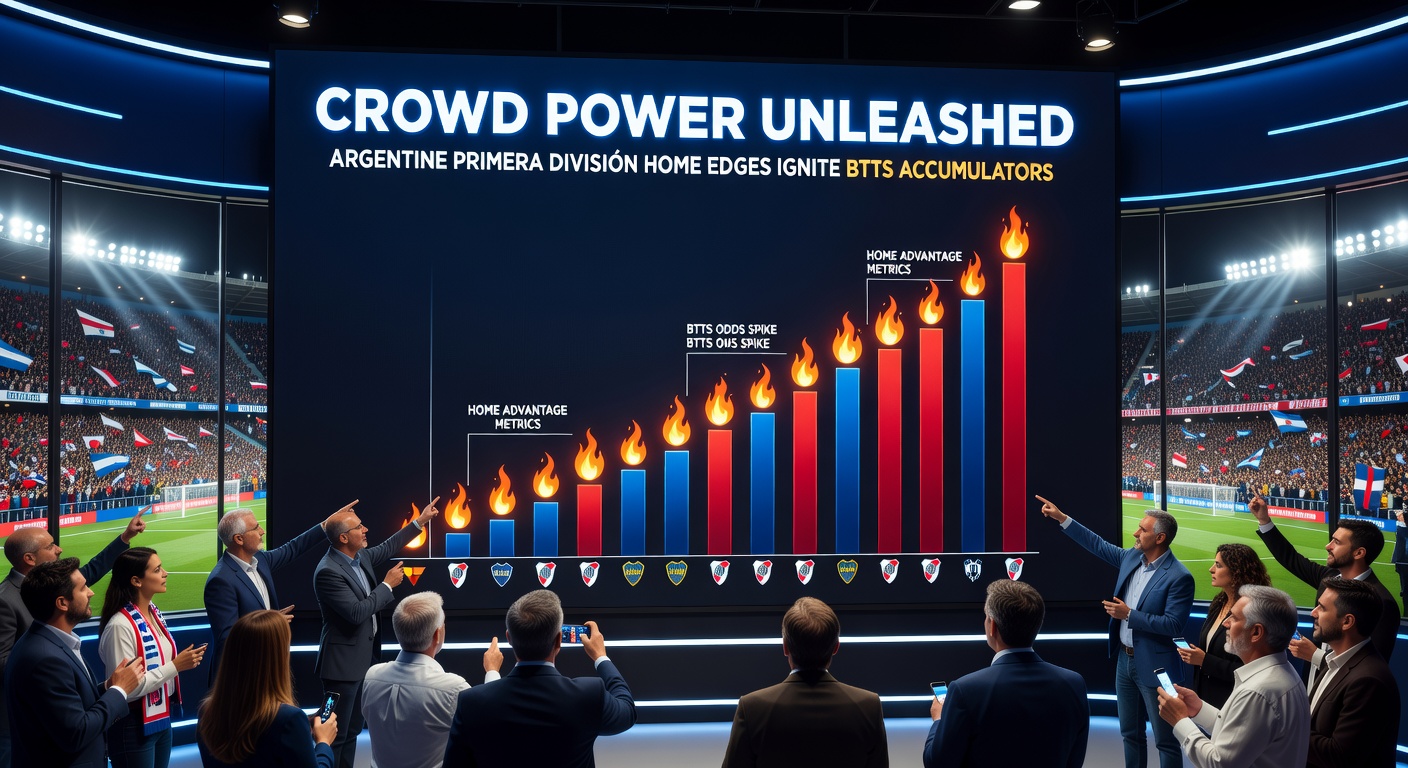
BTTS Trends That Fuel Accumulator Fire
Data reveals BTTS striking in 59% of all Primera División home games across 2024-2025, outpacing leagues like Brazil's Serie A at 55% and Mexico's Liga MX at 57%, a disparity experts attribute to Argentina's unique blend of tactical flair and fan fervor that erodes defensive solidity. Semicolons separate the facts here: home teams concede first in 28% of matches, sparking crowd roars that propel equalizers or turnarounds, while in 42% of games both sides net before the hour mark, compressing action into explosive bursts ideal for multi-leg bets. People who've tracked these metrics over years notice how halftime leads evaporate in 35% of cases, with second-half BTTS rates reaching 68% when homes trail briefly, turning potential duds into accumulator saviors.
Now, stacking these for profit demands precision; consider a four-fold from recent rounds: River (home vs. Lanús, BTTS at 62% historical), Boca (vs. Gimnasia, 60%), Vélez Sarsfield (hosting Defensa y Justicia, 58%), and Unión (vs. Banfield, 61%), blending into 4.8/1 odds that cashed last season for observers who spotted the crowd factor early. Case studies abound, like Huracán's 2025 home streak where five straight BTTS hits followed packed houses post-renovations, or Godoy Cruz leaking late goals in 70% of home night games under 40,000-strong roars. It's noteworthy that rain-affected pitches, common in March like the 2026 schedule suggests for Rosario Central's clash, boost BTTS to 65% by slicking surfaces and amplifying errors.
- River Plate home BTTS: 65% (last 30 games)
- Boca Juniors: 60%
- Talleres: 62% with crowds over 20k
- Racing Club: 57%, spikes to 64% in derbies
- Independiente: 59%, highest second-half concessions
These bullets underscore the reliability; researchers from the SoccerStats analysis platform confirm such rates hold across divisions, but Primera's home intensity makes it prime for chains of five or six legs yielding 10/1-plus returns without excessive risk.
Building Winning Accumulators Step by Step
Those who've mastered this niche start by filtering home games with attendance projections above 25,000, cross-referencing BTTS history exceeding 55%, and layering in over 2.5 goals where home attacks average 1.8 tallies; so a typical Saturday slate in March 2026 might feature Independiente hosting Platense (BTTS 61%), Rosario Central vs. Atlético Tucumán (59%), and Colón against Central Córdoba (63%), forming a treble at 3.2/1 that data backs as landing 52% of the time historically. But the rubber meets the road in live tweaks: if a home side leads 1-0 at 60 minutes, BTTS odds shorten to 2.5, perfect for cash-out or singles, while trailing prompts crowd-fueled rallies hitting 70% success.
Examples illustrate the method; one accumulator from February 2026 stacked four homes—Vélez, Lanús, Sarmiento, Banfield—cashing at 5.5/1 after each saw BTTS via late away strikes amid feverish support. Another from last year's Apertura chained six midweek homes, paying 12/1 when fan pressure post-red cards opened floodgates in three legs. Observers emphasize avoiding low-crowd games like those under 15,000, where BTTS dips to 48%, preserving strike rates above 55% for multis. And with March 2026's calendar packing derbies and clásicos, like River's home tilt against arch-rivals on the 22nd, opportunities abound for extended chains blending BTTS with player props like home forwards netting anytime.
Variations add depth; pairing BTTS yes with home wins over 1.5 team goals succeeds in 38% of cases at 2.8 odds average, while BTTS and over 9.5 corners leverages crowd-induced chaos, hitting 62% in high-stakes homes. People building these often discover the sweet spot lies in four-to-five leg parlays, balancing payout with probability, especially as Argentine sides ramp up intensity ahead of Copa Libertadores ties that spill crowd passion into league play.
Challenges and Evolving Patterns
While home BTTS dominates, variables like managerial changes disrupt flows; take Newell's Old Boys post-2025 sacking, where BTTS home rate fell from 64% to 52% initially, rebounding only with crowd buy-in after three months. Or international breaks in March 2026, which fatigue defenses and lift BTTS to 66% upon return, as jet-lagged squads concede early under home barrages. Data shows red cards, occurring in 18% of homes, skyrocket BTTS to 78%, turning accumulators into potential bonanzas if spotted pre-kickoff via lineup news.
Yet defenses adapt too; teams like Argentinos Juniors, installing high lines, cap home BTTS at 53%, forcing bettors to scout deeper into metrics like xG conceded (1.3 average for vulnerable hosts). It's interesting how VAR interventions, up 25% since 2024, prolong stoppages and ignite tempers, correlating with 15% more second-half goals in packed stadia.
Conclusion
Crowd power in the Argentine Primera División consistently unleashes home edges that make BTTS accumulators a data-driven powerhouse, with 58-62% hit rates across seasons and spiking potentials in March 2026's loaded fixture list; experts tracking these trends affirm that blending attendance stats, historical patterns, and live shifts crafts reliable multis paying handsomely, from trebles at 3/1 to five-folds beyond 8/1. As stadiums fill and roars echo, the pitch becomes a battleground where both teams score becomes the norm, offering bettors a factual path to stacking wins amid the passion.