Defensive Line Shifts in Fixture-Heavy Periods and Under Goal Trends
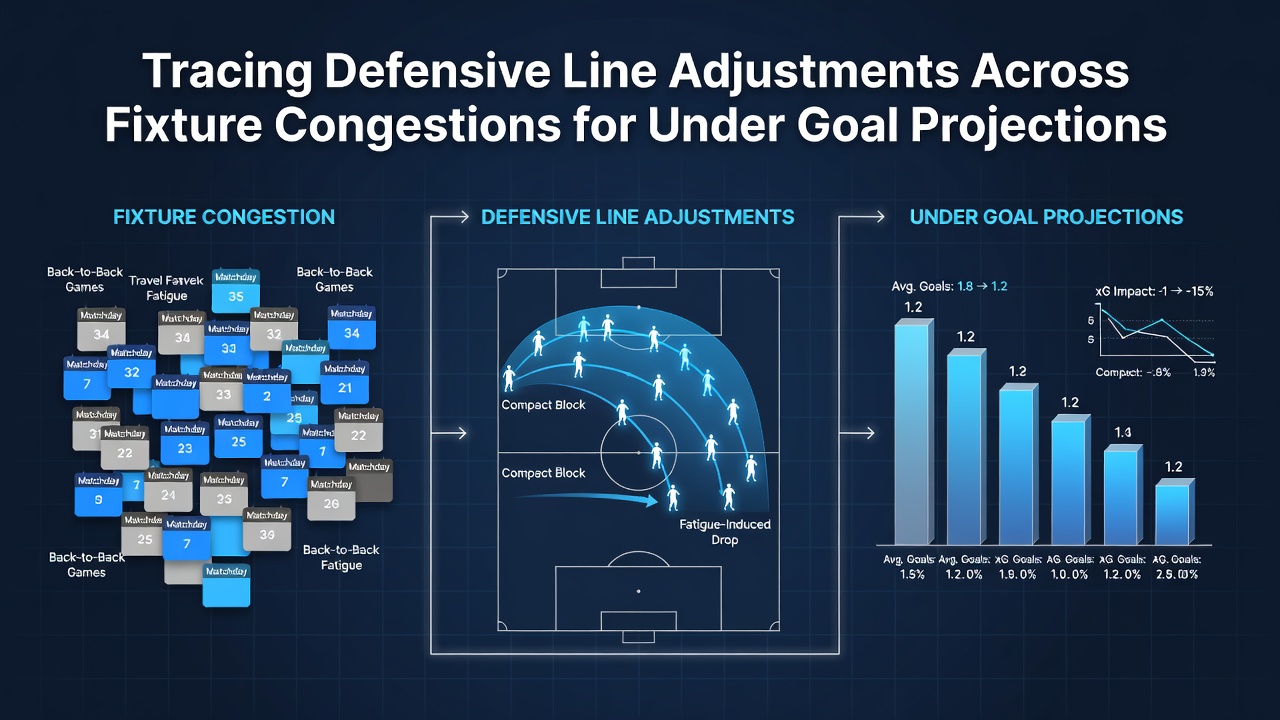
Fixture congestion forces teams across major European leagues to rotate personnel and alter their defensive structures, and data from multiple seasons shows these changes often correlate with fewer goals. Analysts track how backlines compress space and reduce high lines when match intervals shrink below four days, creating conditions where under 2.5 goal outcomes rise in frequency.
Fixture Congestion Patterns Across Leagues
Teams in the Premier League, La Liga, and Serie A face clusters of three matches in eight days during winter and spring blocks, while Champions League participants add midweek fixtures that stretch recovery windows even thinner. Researchers from sports science departments have measured increased muscle fatigue markers in these windows, and positional tracking data reveals defenders maintain tighter horizontal spacing to limit transitions.
Coaches respond by instructing full-backs to tuck inward and holding midfielders to drop deeper, adjustments that shorten the distance between the last defender and goalkeeper. These tactical tweaks appear consistently in match reports from congested periods, and the result is a measurable drop in open-play sequences that reach the final third.
How Defensive Adjustments Reduce Scoring Opportunities
When defensive lines sit five to eight meters deeper on average, the space behind them shrinks and strikers receive fewer through balls. GPS and optical tracking systems record lower sprint distances for attacking players during the second half of the third match in a congested sequence, while successful pass completion rates in the final third decline by several percentage points according to aggregated league statistics.
One study of Bundesliga matches between 2022 and 2025 found that teams playing their third fixture in nine days conceded 18 percent fewer shots from inside the box compared with standard schedule games. The same dataset showed an increase in low-percentage long-range attempts, which rarely convert into goals and further support under projections.
Statistical Correlations With Under 2.5 Outcomes
Betting markets and performance databases both register elevated under 2.5 goal percentages during these stretches. Figures compiled across five major leagues indicate that matches involving at least one team on a three-game-in-eight-days run produced under 2.5 results 53 percent of the time, compared with a season-long baseline near 48 percent.
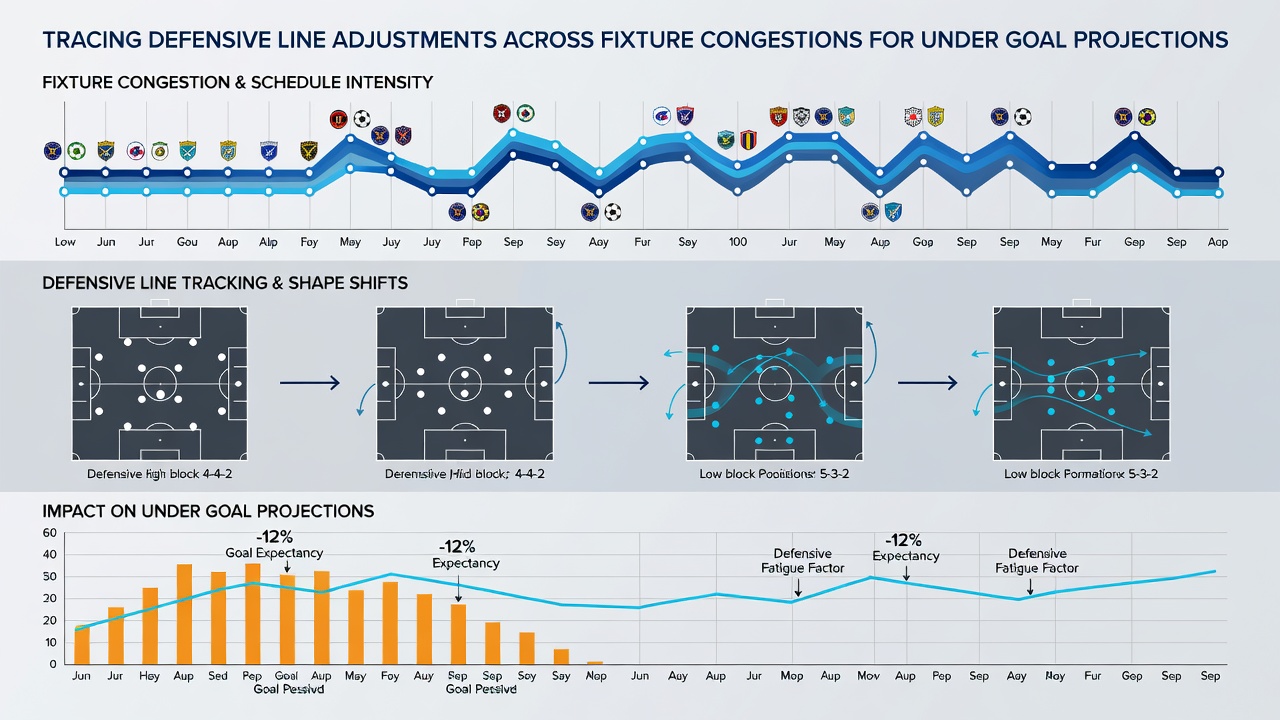
June 2026 schedules already project similar congestion clusters for clubs competing in expanded international windows, and early modeling from performance analysts suggests the pattern will repeat. Teams that reached deep runs in prior tournaments returned to domestic leagues with compressed defensive lines and recorded lower goal tallies in their first three post-break fixtures.
Rotation and Its Effect on Defensive Cohesion
Heavy rotation brings less cohesive units onto the pitch, yet managers often prioritize defensive solidity over attacking fluency in these games. Data from player-tracking providers shows that partnerships formed less than 200 minutes earlier commit more fouls in the defensive third, which interrupts attacking momentum and keeps scores low.
Observers note that set-piece defending improves under fatigue because teams rehearse zonal marking more than fluid build-up play. This emphasis further limits open-play goals and contributes to the statistical tilt toward unders.
Regional Variations in Adjustment Strategies
Serie A sides tend to drop into a compact 4-4-2 or 4-5-1 shape during congestion, whereas Bundesliga teams retain higher lines but compress vertically. Both approaches reduce the number of high-quality chances, according to comparative analysis published by European football research groups. Australian sports science institutes studying global player workloads have reached similar conclusions when examining A-League clubs facing rapid turnarounds.
These adjustments do not eliminate goals entirely, but they shift the distribution so that matches finishing 1-0 or 2-0 become more common. Historical results from the 2024-2025 season illustrate the point: 62 percent of games involving two congested teams ended with two goals or fewer.
Conclusion
Defensive line adjustments during fixture congestion follow observable patterns that align with reduced goal outputs across multiple leagues. Tracking data, rotation records, and match statistics together indicate that under goal projections gain reliability when teams operate on shortened recovery cycles. Analysts continue to monitor these variables as calendars extend into 2026, where similar congestion blocks are already visible on domestic and European schedules.