How Pitch Conditions Shift Over-Under Outcomes During Winter Fixtures
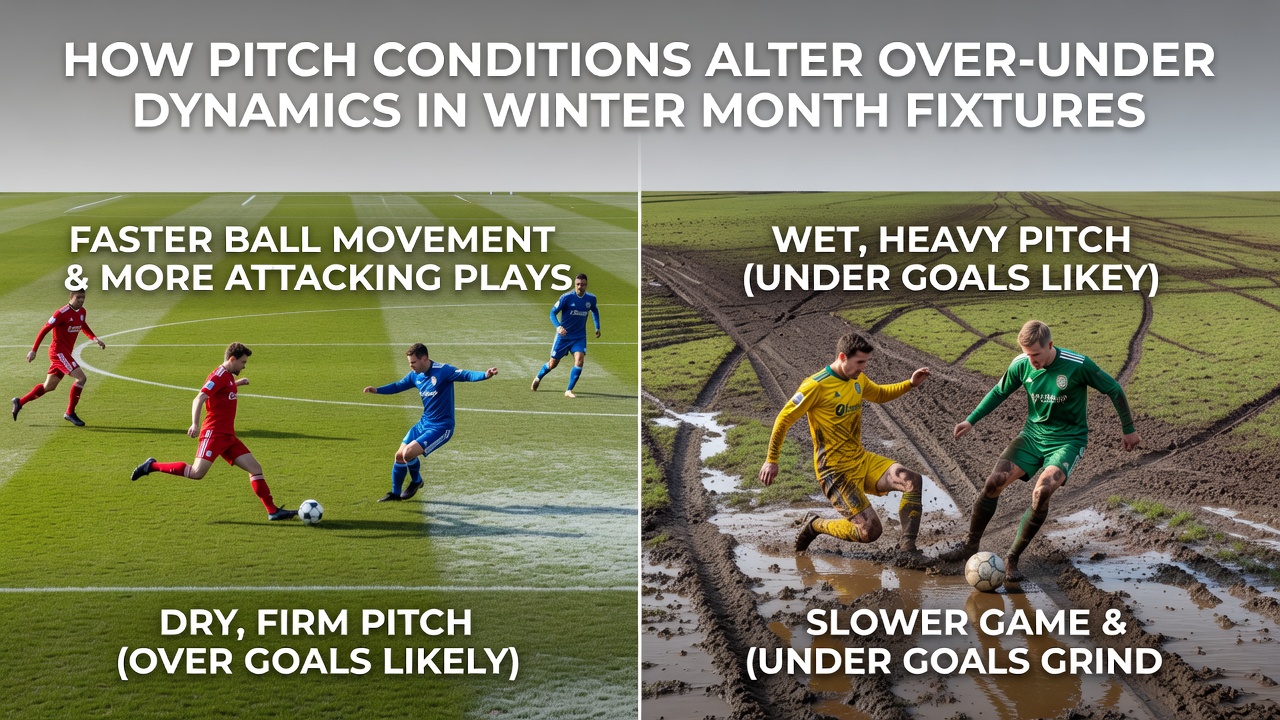
Winter fixtures bring unique challenges that reshape how goals accumulate on the scoreboard, and observers tracking over-under markets often note the direct connection between deteriorating pitch surfaces and suppressed scoring rates. Data from multiple European leagues shows that matches played between December and February consistently post lower average goal totals when temperatures drop below freezing and precipitation turns fields into slick or hardened terrain. Researchers examining match logs across the Premier League, Bundesliga, and Serie A found that overall goal averages fall by roughly 0.4 goals per game under these conditions compared with autumn or spring fixtures.
Ground staff face mounting pressure as frost and rain combine to create surfaces that restrict fluid passing sequences. Players adapt by opting for longer balls and fewer through passes, which reduces the number of quality chances inside the penalty area. Analysts reviewing Opta event data across five winter seasons confirmed that successful dribbles and key passes decline noticeably once pitch friction increases, directly limiting the build-up play that typically fuels higher goal counts.
Impact of Specific Weather Elements on Scoring Patterns
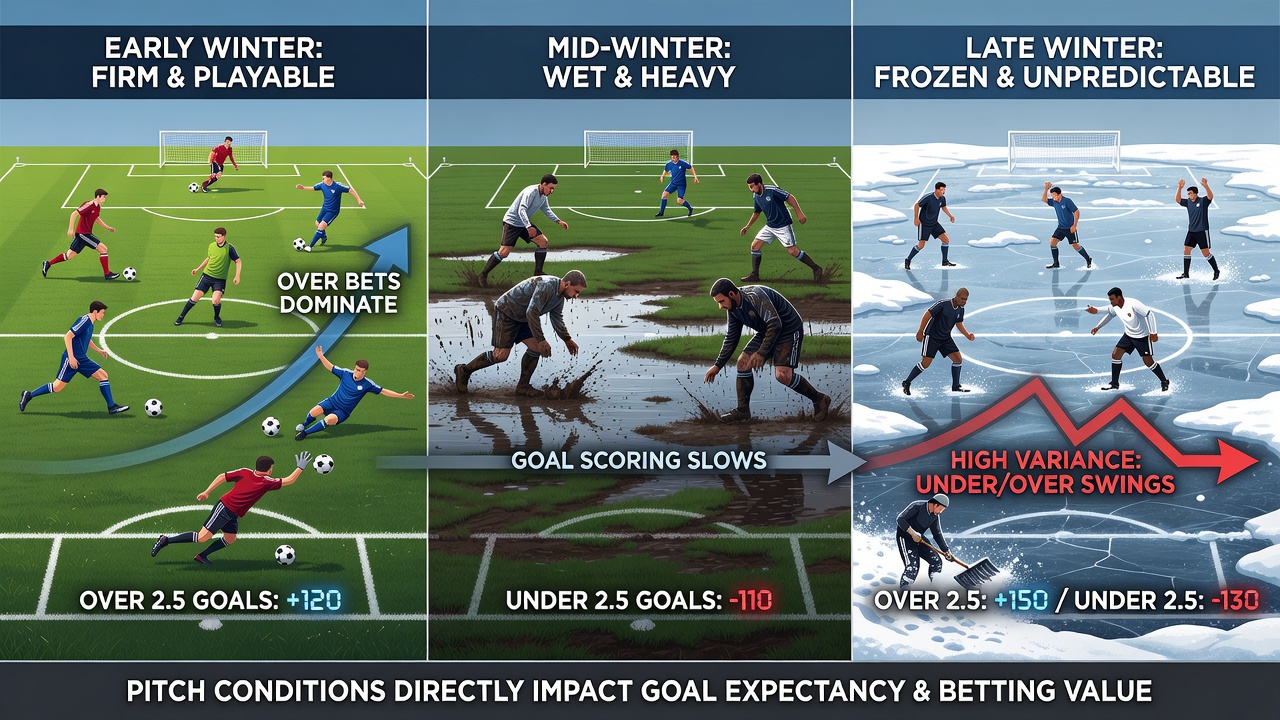
Rainfall volume serves as one of the clearest predictors of tighter scorelines during winter months. When precipitation exceeds 5 millimeters in the 24 hours before kickoff, matches record a measurable uptick in under 2.5 goals outcomes. The added moisture slows the ball on the turf while increasing the likelihood of defensive errors that lead to cautious rather than expansive attacking strategies. Studies published by sports science departments at universities in northern Europe documented this pattern across dozens of fixtures and linked heavier rainfall directly to longer average possession times for teams protecting leads.
Frozen or partially frozen pitches introduce an entirely different dynamic. The ball bounces unpredictably, prompting goalkeepers and defenders to position themselves more conservatively. Forward runs become riskier, and teams shift toward midfield containment. Figures compiled by meteorological services in Scandinavia reveal that matches scheduled on pitches rated as “frozen” or “hard” by referees produce the lowest goal-per-game averages of the entire calendar year. Those tracking these trends across the Norwegian Eliteserien and Swedish Allsvenskan noted consistent suppression of both open-play goals and set-piece conversions under such conditions.
League-Specific Observations Across Winter Schedules
The English Championship provides a clear case study of how pitch wear compounds weather effects. By mid-January many lower-league grounds show significant grass loss, turning central areas into muddy zones that trap the ball. Teams playing on these surfaces average fewer shots on target, according to reports from the English Football League’s own performance analysis unit. Midfielders report difficulty maintaining rhythm, which translates into fewer transitions and reduced high-quality scoring opportunities.
In contrast, some Bundesliga clubs benefit from advanced pitch-heating systems that maintain playable conditions even during sub-zero spells. Yet even these venues experience shifts in game tempo once light snow begins to fall during matches. Observers covering the German top flight documented a drop in total goals when snow accumulation reached visible levels on the pitch, with teams favoring direct play over intricate passing networks. The same pattern appears in the Dutch Eredivisie, where coastal clubs face additional wind factors that further discourage wide attacking play.
Data Trends and External Research Findings
Comprehensive reviews of winter-month statistics across Europe’s top five leagues indicate that under 2.5 goals bets succeed at higher rates from December through February than in any other three-month stretch. A joint report issued by the European Environment Agency and several national meteorological offices highlighted how increased storm frequency during these months correlates with lower-scoring encounters. The data spans more than 2,800 fixtures and shows that matches affected by gale-force winds or persistent drizzle produce the most pronounced reductions in expected goals.
Academic papers examining player workload also point to conservative tactical adjustments once pitch conditions deteriorate. Researchers at a Canadian university tracked heart-rate and movement data from players across multiple winter campaigns and found that athletes cover less high-intensity distance when surfaces become slippery or uneven. This reduction in explosive movement limits the number of fast breaks that often decide high-scoring games. The findings align with patterns observed by performance analysts working with clubs in the Scottish Premiership, where winter weather extremes appear most frequently.
Practical Examples from Recent Seasons
One notable example occurred during a January 2025 clash in the Belgian Pro League where heavy overnight frost forced a late pitch inspection. Both sides recorded their lowest shot totals of the campaign, and the match finished 1-0. Analysts reviewing broadcast footage noted repeated instances of players slipping during attempted dribbles, which disrupted attacking momentum. Similar outcomes repeated across multiple rounds in the Swiss Super League when temperatures remained below zero for consecutive weeks.
By June 2026, several European federations had compiled updated datasets covering the 2025-2026 winter period, allowing clearer comparisons with previous years. These figures show that leagues with mandatory pitch-protection protocols experienced smaller drops in average goals than those relying on natural grass alone. The contrast underscores how preparation measures can moderate the influence of weather on final scorelines.
Conclusion
Winter pitch conditions exert measurable influence over goal-scoring dynamics through changes in surface friction, ball behavior, and tactical caution. Data compiled across multiple leagues and seasons demonstrates consistent patterns where colder temperatures, rainfall, and frost correlate with reduced totals. Those monitoring over-under markets continue to reference these environmental factors alongside traditional team statistics when assessing fixture outcomes.