Mapping Venue-Specific Scoring Rhythms Across Continental Competitions for Refined Accumulator Construction
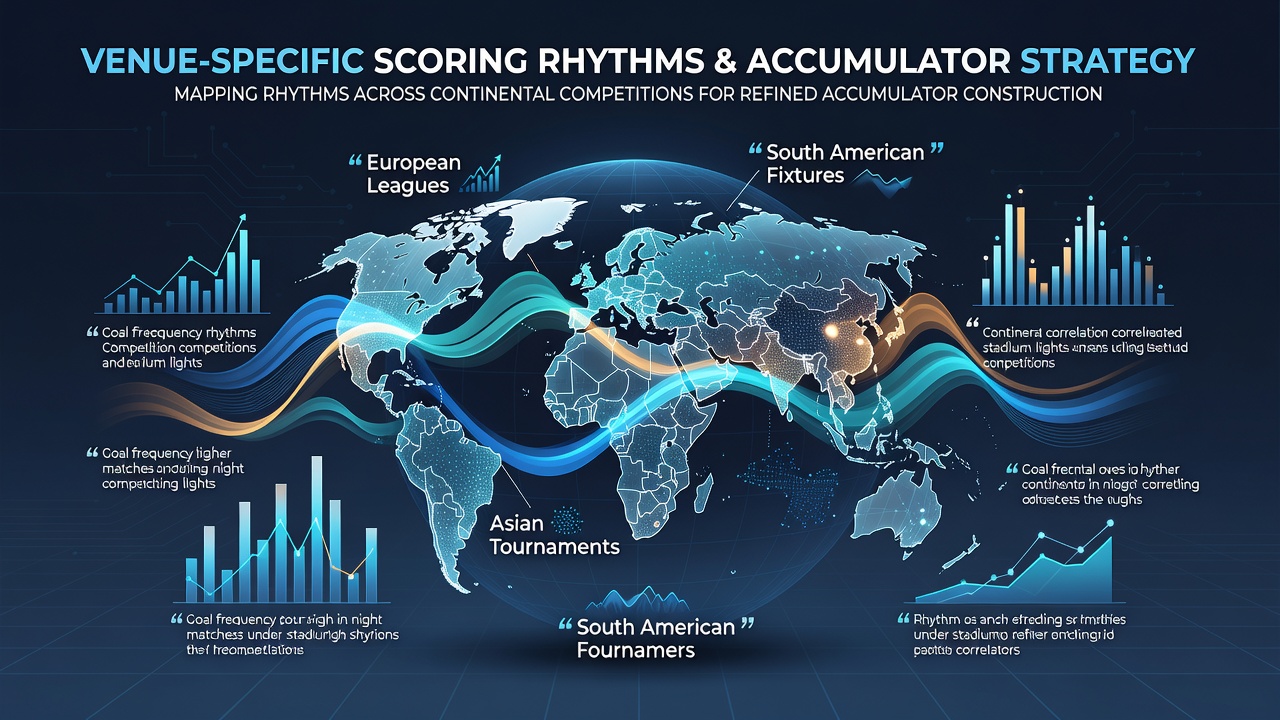
Continental club competitions reveal distinct scoring patterns tied to specific venues, and analysts track these rhythms to build more precise accumulators that combine goals, both teams to score markets, and half-time outcomes. Data from matches across Europe, South America, and Asia show that home venues often produce tighter first halves followed by increased second-half activity, while certain away grounds maintain low-scoring trends throughout entire ties. Observers note that these venue-driven shifts appear consistently across UEFA Champions League qualifiers, Copa Libertadores group stages, and AFC Champions League encounters, where pitch dimensions, altitude, and crowd density influence the timing of goals.
European Venue Patterns in Summer Qualifiers
July 2026 marks the start of UEFA Champions League and Europa League qualifying rounds, and records indicate that venues in northern and eastern Europe frequently deliver under 2.5 goals in opening legs due to cooler evening temperatures and firmer pitches. Teams playing at home in these ties convert early chances at lower rates, yet they increase output after the sixtieth minute as fatigue affects visiting sides. Researchers compiling multi-year datasets have observed that certain stadiums in Scandinavia and the Baltics record higher percentages of goals in the final twenty minutes, which creates opportunities for accumulators focused on late goals or second-half over 1.5 markets when combined with more open venues elsewhere on the continent.
Venues in western and southern Europe tend to produce more balanced scorelines across both halves, with both teams to score appearing more regularly in group-stage fixtures. Those compiling accumulator selections often cross-reference these venue histories against current squad availability, because substitute introductions at high-altitude or smaller pitches have historically lifted goal tallies in the closing stages. Figures from continental governing bodies illustrate that home sides in these regions maintain possession advantages that translate into sustained pressure rather than immediate goals, which affects the construction of accumulators that mix over 2.5 goals with both-teams-to-score legs.
South American and Asian Continental Trends
Copa Libertadores matches demonstrate pronounced venue effects linked to altitude and climate, where stadiums above 2,000 metres record earlier first goals yet fewer total strikes after the break because of reduced player recovery times. Analysts mapping these rhythms note that away sides in high-altitude venues often secure clean sheets in the opening forty-five minutes before conceding during the final thirty, a pattern that supports refined accumulator structures pairing under 1.5 first-half goals with over 2.5 second-half goals across multiple ties. Similar venue-specific data from AFC Champions League fixtures in East Asia show that humid coastal grounds produce steadier goal distribution throughout matches, whereas inland venues with larger pitches favour teams that maintain width and create late openings.
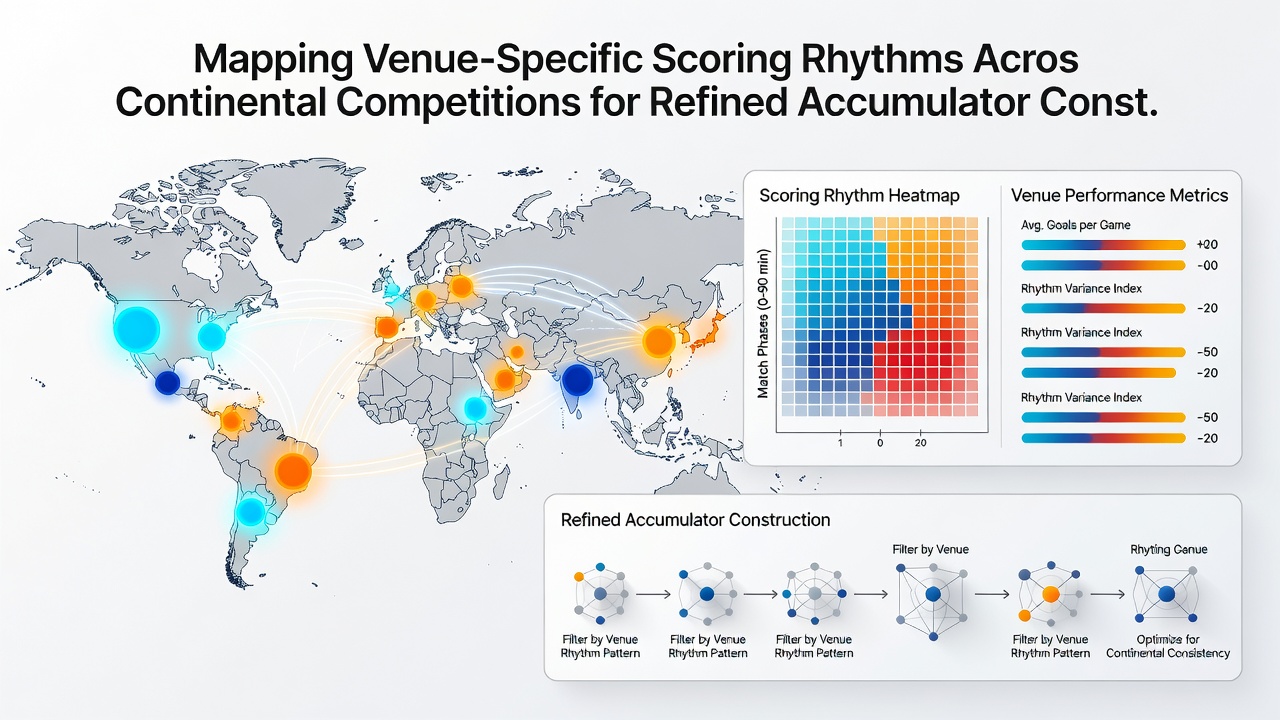
Those tracking continental competitions integrate these regional differences by layering venue data onto broader league form, which allows for accumulators that avoid high-variance legs at unfamiliar grounds. Studies conducted by sports performance institutes across multiple continents have documented how travel distance and recovery windows alter expected goal outputs at specific stadiums, particularly during midweek rounds that follow domestic fixtures. The resulting datasets enable more granular selection of markets such as Asian handicap, exact goal ranges, and half-time/full-time combinations that align with documented venue rhythms rather than generalised league averages.
Accumulator Refinement Through Venue Mapping
Accumulator builders combine venue-specific scoring timelines with current squad metrics to reduce variance across multiple legs. For instance, pairings that link a low-scoring first-half market at a northern European qualifier with a both-teams-to-score selection at a South American coastal ground have shown repeatable correlations in historical records. Data aggregators supplying continental competition statistics allow users to filter by exact venue and time of year, which reveals whether certain stadiums consistently deviate from competition-wide averages during July and August windows.
According to reports published by the UEFA club competitions analysis unit, home advantage at qualifying venues varies significantly by region and pitch surface, information that directly informs accumulator timing decisions. Likewise, research from the CONMEBOL technical studies group highlights how altitude venues alter expected goal timing, providing another layer of data for cross-continental selections. Observers compiling these sources note that successful accumulator construction now incorporates venue heat maps that track not only total goals but also the distribution of scoring events across fifteen-minute intervals.
Conclusion
Venue-specific scoring rhythms across continental competitions supply measurable inputs for accumulator refinement when analysts combine historical timing data with current squad and fixture context. European qualifiers, South American group matches, and Asian continental ties each present distinct patterns tied to geography, climate, and infrastructure, and those patterns remain consistent enough to support structured market selections. Continued collection of granular venue statistics will further support precise accumulator builds as competitions progress through the 2026 calendar.