Mountain Elevation Reshapes Goal Totals Across Andean Football Leagues
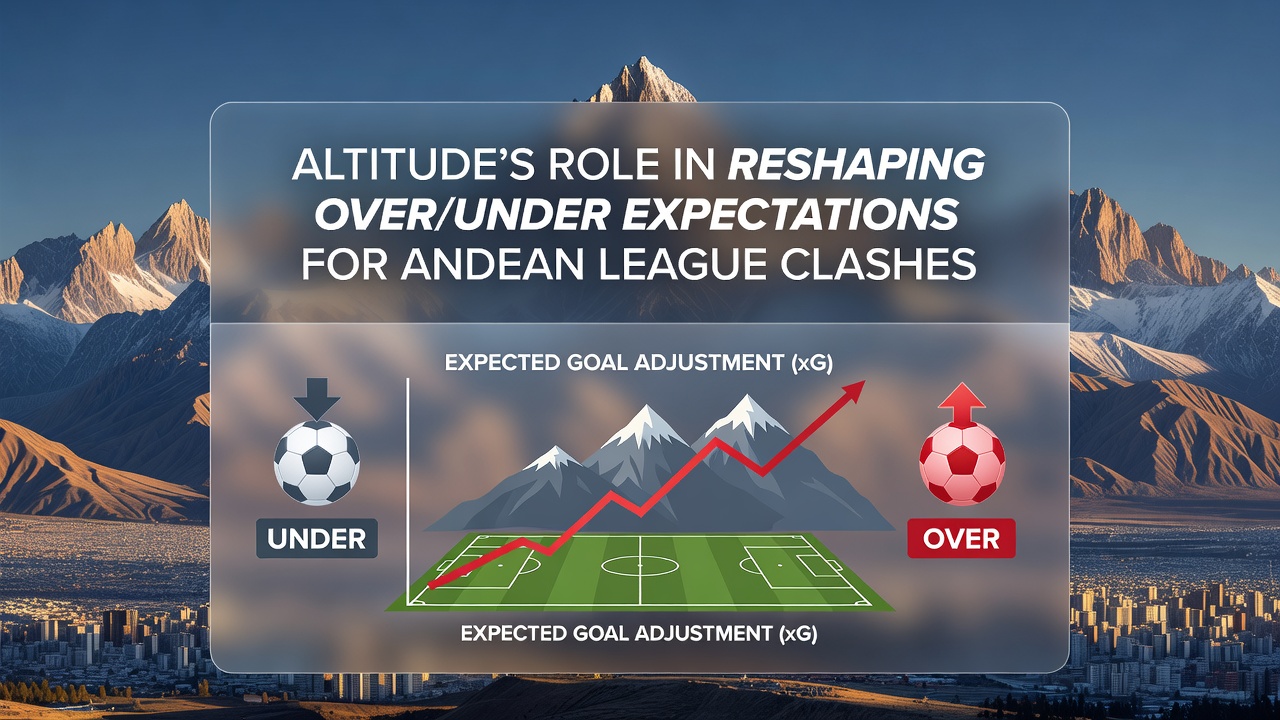
Football matches played at elevations above 2,500 meters present distinct challenges that alter scoring patterns and force adjustments to over/under expectations in several South American leagues, and data from CONMEBOL competitions between 2023 and 2026 illustrate these shifts consistently across Bolivia, Peru, and Ecuador.
Teams based in cities such as La Paz, Quito, and Cusco host fixtures where reduced oxygen levels affect aerobic capacity, sprint recovery, and decision-making speed, while visiting sides from lower altitudes encounter immediate disadvantages that often suppress total goals in the opening half.
Physiological Factors Driving Scoring Changes
Research from the Universidad de los Andes in Bogotá demonstrates that players experience a 10 to 15 percent drop in maximum oxygen uptake when competing above 3,000 meters without prior acclimatization, and this reduction compounds during the second half when fatigue sets in. Home squads maintain higher work rates because residents adapt through increased red blood cell production, yet visiting players frequently record elevated heart rates and slower recovery between bursts of speed.
These conditions translate directly into fewer sustained attacks and reduced shooting accuracy, particularly in the final 30 minutes, and match logs from the Bolivian Primera División during the 2025 Clausura phase show average goals per game falling to 2.1 in venues above 3,500 meters compared with 2.8 at sea-level grounds.
League-Specific Trends in Bolivia and Peru
Bolivian clubs playing at the Estadio Hernando Siles in La Paz recorded under 2.5 goals outcomes in 68 percent of home matches during the 2024-2025 season, and similar patterns emerged in Peru where Universitario and Sporting Cristal faced elevated opponents. Visiting teams from coastal regions such as Lima averaged 0.7 goals per away fixture at high altitude across the same period, while they managed 1.4 goals when hosting those same sides at lower elevations.
June 2026 fixtures in the Copa Libertadores group stage reinforced these observations when Bolívar hosted two matches at altitude and conceded just one goal across 180 minutes, with both encounters finishing under 2.5 total goals despite pre-match expectations centered on attacking styles from the visiting Brazilian and Argentine sides.
Ecuador and Colombia Adjustments
Ecuadorian Serie A encounters at Quito's Estadio Olímpico Atahualpa, situated at 2,850 meters, produced under 2.5 results in 61 percent of games through the first half of 2026, and teams traveling from Guayaquil or Manta frequently altered formations to prioritize defensive compactness rather than pressing high. Colombian Categoría Primera A sides based in Bogotá and Tunja exhibited parallel effects, with away sides posting lower expected goal values when arriving directly from matches below 1,000 meters.
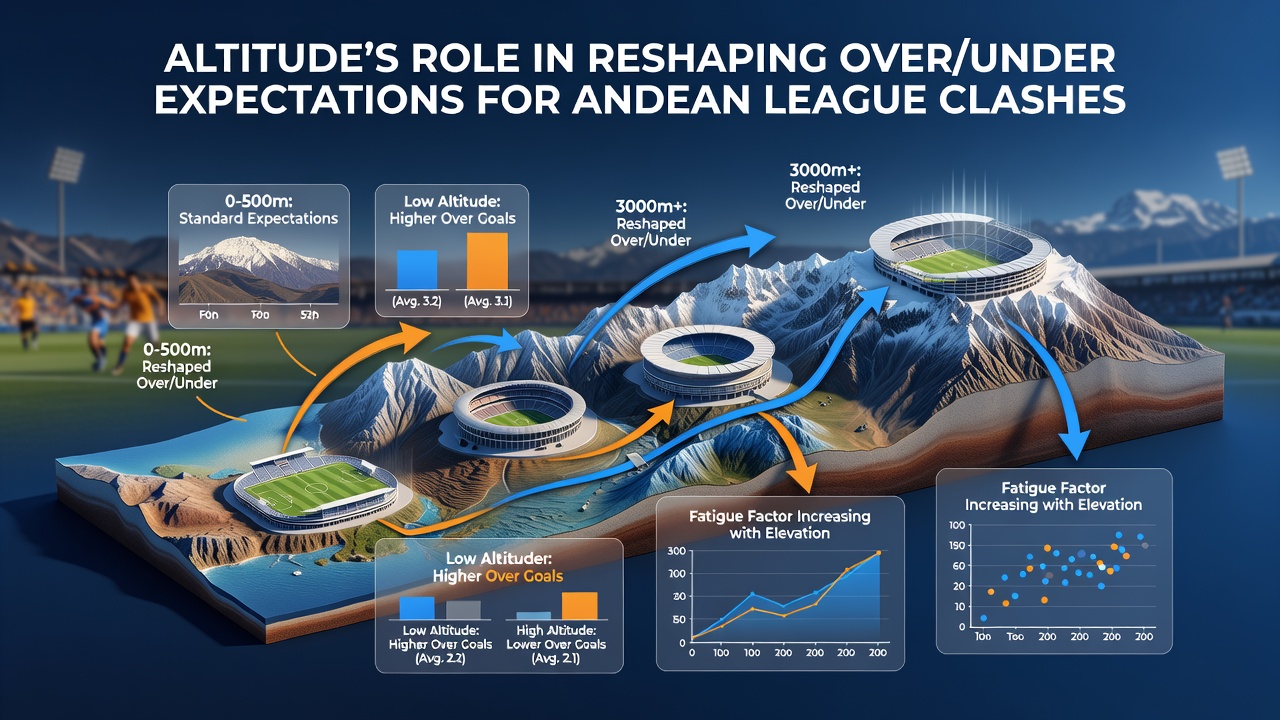
Coaches have responded by rotating squads earlier and incorporating more midfield anchors to protect transitions, and these tactical shifts further compress open play opportunities that typically generate higher goal counts in lowland fixtures.
Betting Market Adaptations and Data Tracking
Bookmakers now apply elevation-based modifiers to over/under lines for Andean derbies, reducing the threshold for under bets by 0.25 to 0.5 goals when venues exceed 2,800 meters, and historical datasets from Opta and Wyscout confirm that these adjustments align closely with observed outcomes over multi-season samples. Analysts track acclimatization windows, noting that sides arriving three or more days early see modest increases in total goals, yet many schedules limit such preparation time.
CONMEBOL's technical reports for 2025 highlight how altitude venues produced 22 percent fewer shots on target per game than equivalent matches at lower elevations, and this metric correlates strongly with reduced over 2.5 goal frequency across the Andean corridor.
Conclusion
Altitude continues to exert measurable influence on match dynamics throughout the Andean region, prompting consistent downward revisions to expected goal totals in affected leagues. Data accumulated through mid-2026 shows that operators and analysts maintain separate modeling frameworks for high-elevation fixtures, while teams continue to refine preparation protocols to mitigate physiological constraints. These patterns remain stable across multiple seasons and competitions, providing clear parameters for assessing scoring probabilities in Bolivian, Peruvian, Ecuadorian, and Colombian league encounters.