Packed Calendars and Their Quiet Effect on European Football Scoring Trends
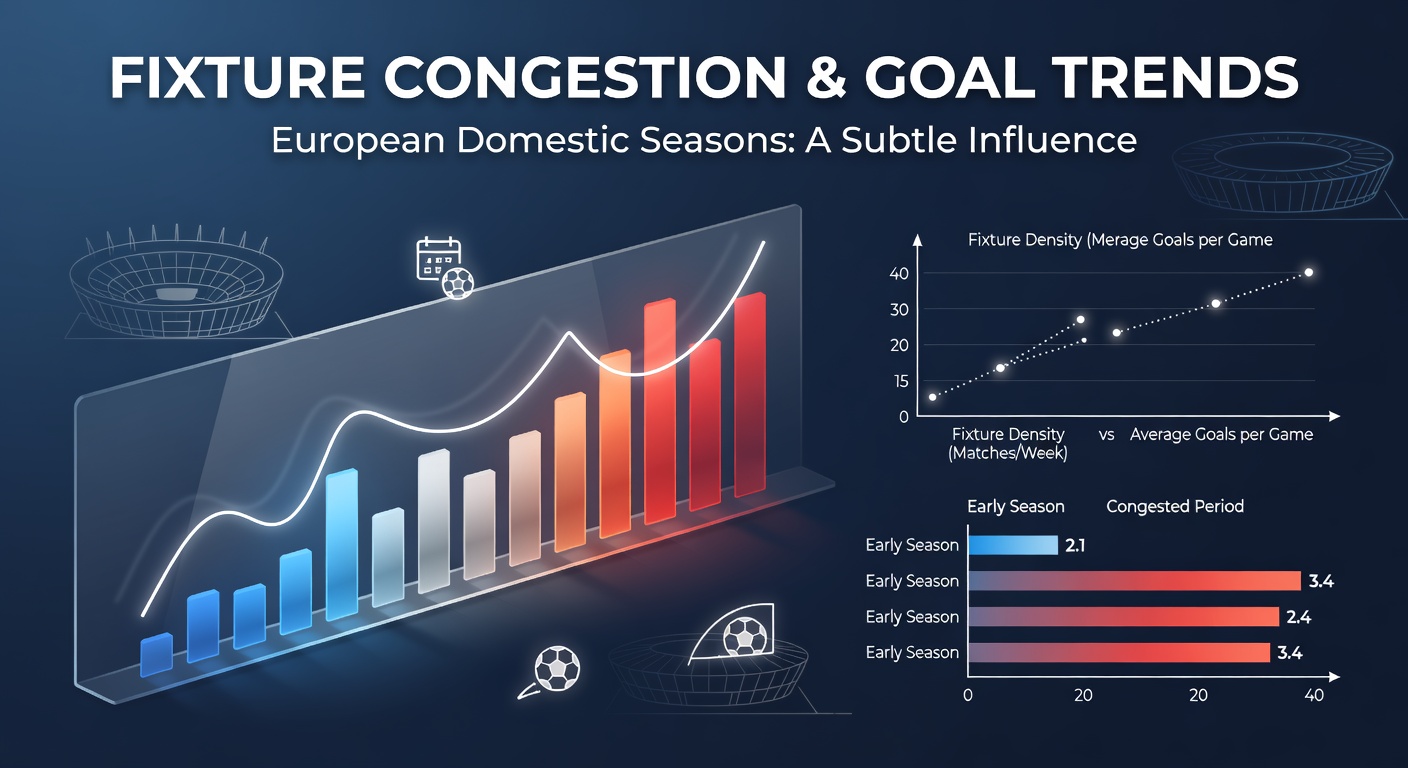
Fixture congestion has long shaped the rhythms of European domestic seasons, and its influence on goal trends emerges through patterns of fatigue, rotation, and tactical adjustment. Researchers tracking data across the Premier League, Bundesliga, La Liga, Serie A, and Ligue 1 note that periods of three matches in eight days often coincide with measurable shifts in scoring output. These changes appear gradually rather than dramatically, yet they accumulate into distinct seasonal signatures that analysts monitor closely.
Player Workload and Its Direct Connection to Scoring Dynamics
High-intensity schedules force clubs to manage squads with greater precision, and this management directly affects the number of goals produced. When teams play multiple fixtures within short windows, starting lineups rotate more frequently; midfielders and forwards who accumulate high minutes show reduced sprint distances in later games according to GPS tracking studies. Defenders similarly exhibit slower recovery times between presses, which creates pockets of space that attackers sometimes exploit yet also leads to more conservative build-up play overall. Data from the 2024-25 campaign illustrated these effects clearly in Bundesliga clubs that reached the Champions League knockout stages, where goal averages dropped by 0.4 per game during peak congestion months compared to earlier periods with wider rest gaps.
Observers have noted that goalkeepers and centre-backs, positions where experience matters most, rarely rotate even under heavy loads. Their consistency can suppress scoring opportunities, particularly in matches where both sides operate with similarly fatigued backlines. Meanwhile, younger squad members introduced during congested stretches sometimes lack the tactical cohesion needed to convert chances efficiently, contributing to a higher volume of low-quality shots that fail to register on the scoresheet.
League-Specific Patterns Revealed Through Seasonal Data
Each major European league displays its own signature response to fixture density. The Premier League tends to see an uptick in goalless draws during December and January when the festive schedule overlaps with European commitments. Serie A clubs, by contrast, often record slight increases in second-half goals once mid-season congestion peaks, as trailing teams push forward with fresher substitutes after coaches have managed early minutes conservatively. La Liga and Ligue 1 show steadier under-2.5 trends across congested blocks, with teams prioritising set-piece organisation over open play due to reduced training time between matches.
What's interesting is how these patterns interact with weather and travel. Northern clubs facing winter double-headers frequently encounter colder conditions that slow pitch surfaces, further reducing goal tallies. Southern leagues experience different pressures when summer tournaments extend into domestic campaigns, leaving squads with limited pre-season preparation and correspondingly cautious early-season scoring rates.
End-of-Season Implications as May 2026 Approaches
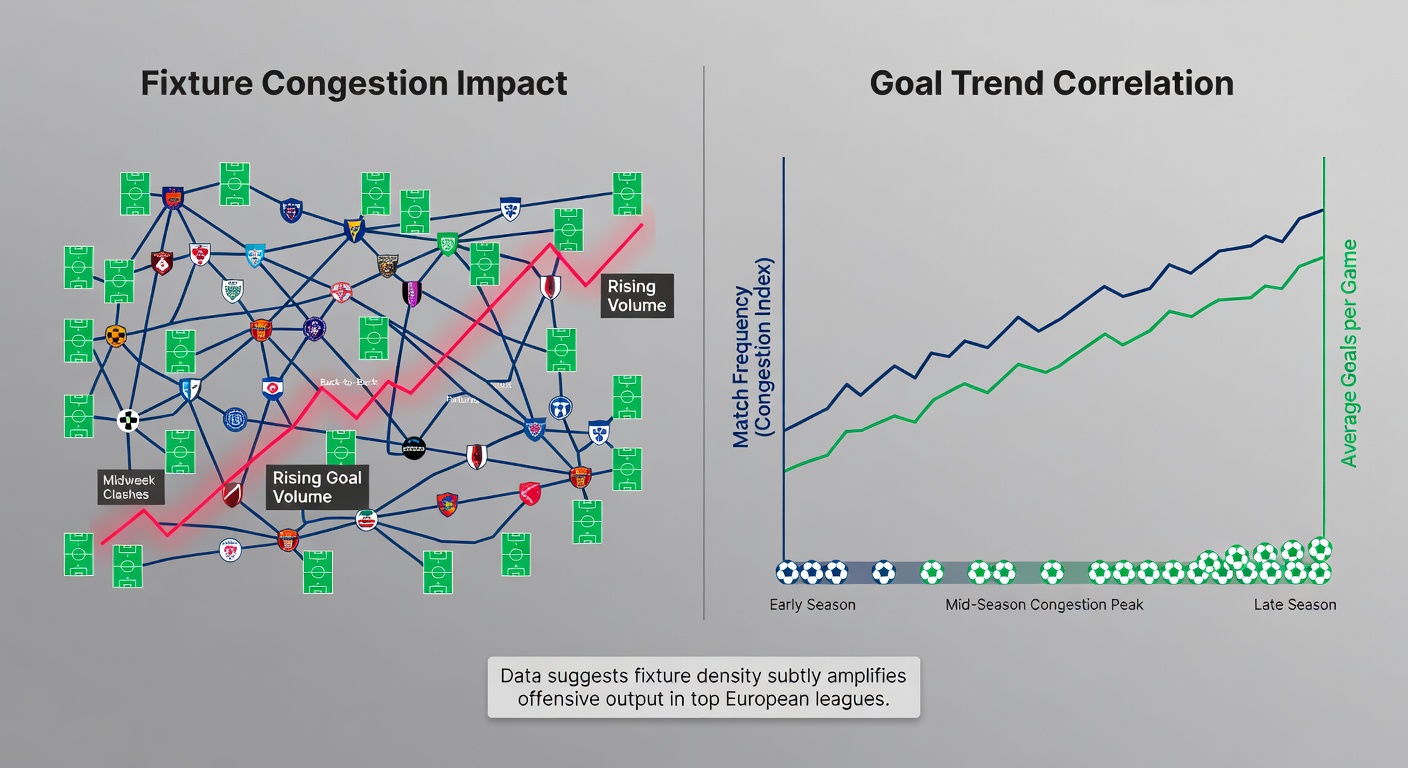
With the 2025-26 campaign entering its final weeks in May 2026, several title races and relegation battles hinge on how clubs handle remaining fixtures. Teams still competing on multiple fronts enter this period with accumulated fatigue that historically correlates with fewer open-play goals and more reliance on set pieces. League tables already reflect narrower margins in matches involving sides that have played 50-plus games, suggesting that goal trends will continue to favour lower-scoring outcomes through the closing fixtures.
Coaches have adapted by deploying hybrid formations that blend defensive solidity with rapid counter options, a strategy that preserves energy while still threatening on transitions. Such adjustments appear in match reports from clubs balancing domestic and continental demands, where average goals per game in the final ten rounds typically fall below seasonal norms by a statistically noticeable margin.
Broader Contextual Factors Influencing Outcomes
Fixture congestion never operates in isolation. International breaks, weather disruptions, and pitch quality all intersect with scheduling density to shape results. A study published by the European Club Association highlighted how travel distance compounds physical load, particularly for clubs in geographically larger leagues. When these variables align, the probability of matches finishing under 2.5 goals rises measurably across multiple competitions.
Betting markets and performance analysts have incorporated these correlations into models, yet the underlying mechanisms remain rooted in straightforward physiology and tactics rather than external speculation. Teams with deeper squads and superior recovery protocols demonstrate greater resilience, maintaining closer to average goal outputs even during intense periods. Those lacking such resources show more pronounced dips, creating the subtle league-wide trends that accumulate over full seasons.
Conclusion
Fixture congestion exerts a quiet but consistent pressure on goal trends throughout European domestic seasons. Through measurable changes in player output, tactical caution, and squad rotation, packed calendars produce patterns that recur across leagues and campaigns. As the 2025-26 season concludes in May 2026, these dynamics will continue to influence final standings and statistical profiles in ways that reward careful observation of workload distribution and rest management. Understanding these connections provides clearer context for interpreting scoring fluctuations without attributing them to chance alone.