Player Exhaustion Patterns Following European Fixtures in Domestic Accumulator Planning
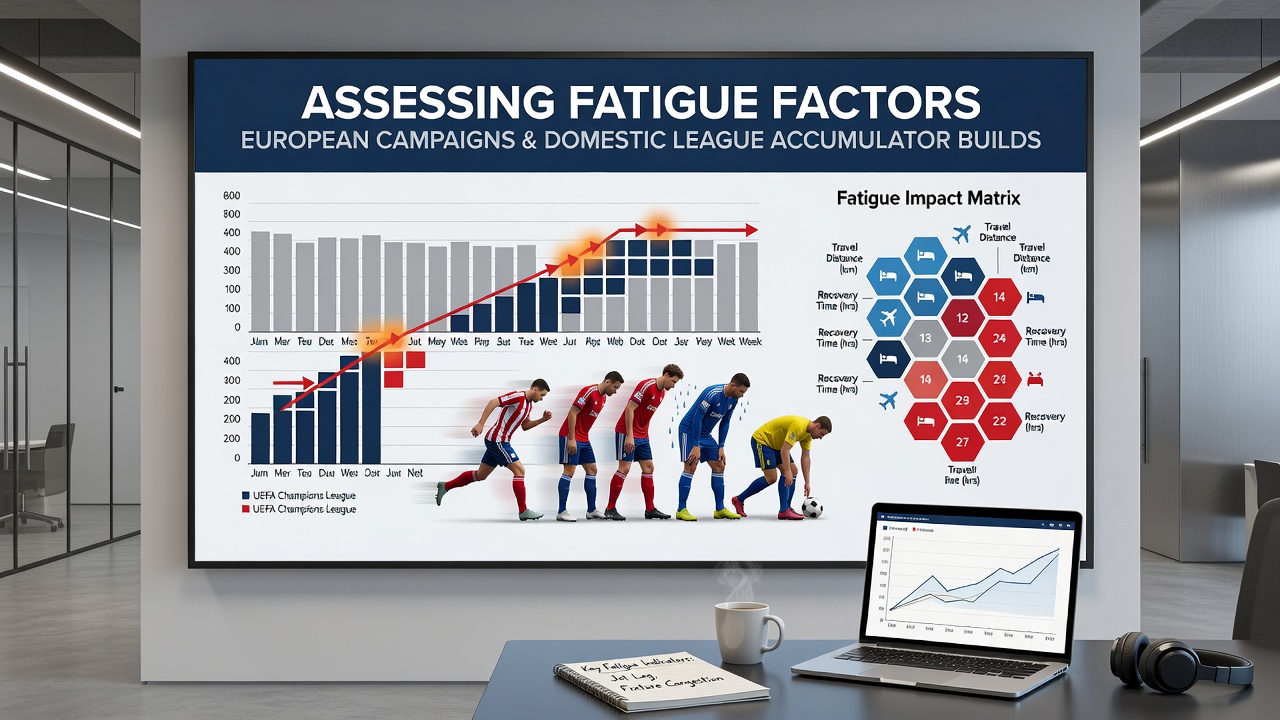
European club competitions place considerable demands on squads throughout the season, and observers note that these midweek fixtures often influence weekend domestic league results in measurable ways. Teams participating in the UEFA Champions League, Europa League, and Conference League travel long distances, manage congested calendars, and rotate personnel, all of which contribute to physical and mental wear that surfaces during subsequent league matches. Data from across top European leagues shows consistent patterns in scoring rates, set-piece efficiency, and defensive lapses when clubs return from continental action.
Calendar Congestion and Workload Metrics
Clubs advancing deep into European tournaments play up to twenty additional matches beyond their domestic schedule, and figures from the 2025-26 campaign reveal that several Premier League, La Liga, and Serie A sides exceeded sixty competitive fixtures by late spring. Researchers tracking GPS and heart-rate data have documented elevated muscle soreness and reduced high-intensity running output in the seventy-two hours following midweek European games. These measurements translate directly into domestic fixtures where starting elevens record fewer successful presses and lower pass-completion percentages in the opening thirty minutes.
Statistical Trends Across Leagues
Analysis of matches played between Thursday and Sunday during the 2025-26 season indicates that teams with European involvement conceded 0.4 more goals per game on average than rested opponents. In Germany’s Bundesliga, for instance, sides returning from continental ties averaged 1.8 goals scored compared with 2.4 when they enjoyed a full week between domestic outings. Similar dips appear in France’s Ligue 1 and Portugal’s Primeira Liga, where under-2.5-goal outcomes rose by twelve percent in post-European rounds. Accumulator builders therefore examine fixture lists for clubs with Thursday night obligations when constructing selections that favor lower-scoring or draw-heavy combinations.
Rotation Policies and Squad Depth
Coaches respond to fixture piles by rotating key attackers and full-backs, yet deeper squads maintain performance levels more effectively. Data compiled by performance analysts shows that clubs with at least four players capable of starting in multiple positions suffer smaller drops in expected goals after European nights. In contrast, teams relying on a narrow core experience steeper declines in chance creation, particularly in away domestic matches. Accumulator models that incorporate squad-rotation indices therefore assign higher probabilities to clean-sheet outcomes for better-resourced sides facing fatigued opponents.
Travel Distance and Recovery Windows
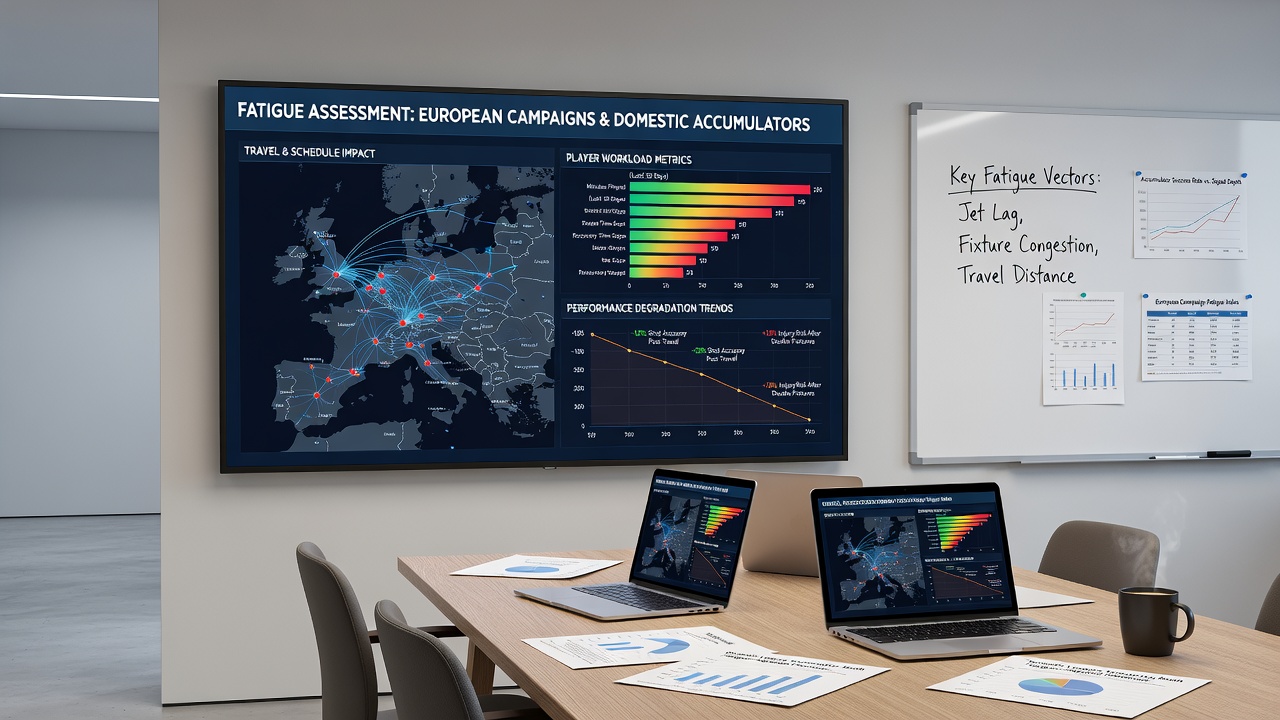
Long-haul trips to Eastern Europe or beyond add another layer of fatigue, and June 2026 schedules already list several early qualifying rounds that force additional flights before pre-season begins. Studies conducted by sports-science departments at universities in Spain and the Netherlands link recovery time of less than sixty hours with measurable declines in sprint speed and decision-making speed. These findings help explain why accumulator selections involving over-2.5 goals sometimes underperform when one side returns from a distant Thursday fixture while the other enjoys a Saturday-to-Saturday rest cycle.
Application to Accumulator Construction
Betting platforms and data providers now publish workload dashboards that flag teams with elevated fixture intensity. Accumulator builders cross-reference these dashboards with historical goal-timing charts to identify matches where first-half under 1.5 goals or both-teams-to-score avoidance carries elevated probability. For example, one study of 2025 Europa League participants revealed that their domestic opponents the following weekend recorded only twenty-eight percent of total goals in the opening forty-five minutes, prompting systematic inclusion of half-time under selections in multi-leg builds.
Regional Variations and League-Specific Responses
Northern European leagues with harsher winter schedules show amplified fatigue effects, whereas Mediterranean leagues sometimes mitigate impact through greater use of squad rotation during warmer months. Canadian and Australian football federations, which monitor similar congestion issues in their domestic calendars, publish comparative reports that echo UEFA findings on recovery windows. Observers therefore treat these international datasets as supplementary benchmarks when projecting outcomes for English, Spanish, or Italian clubs returning from continental ties.
Conclusion
Fatigue assessment from European campaigns supplies a quantifiable edge in domestic league accumulator construction because workload metrics, rotation patterns, and recovery timelines translate into observable shifts in scoring and defensive metrics. By integrating fixture congestion data with league-specific historical trends, analysts construct selections that reflect real performance variances rather than surface-level form guides. Continued collection of GPS, travel, and performance statistics throughout 2026 will further refine these models across Europe’s major competitions.