Referee Decision Patterns in Iberian Leagues Refine Scoreline Projections
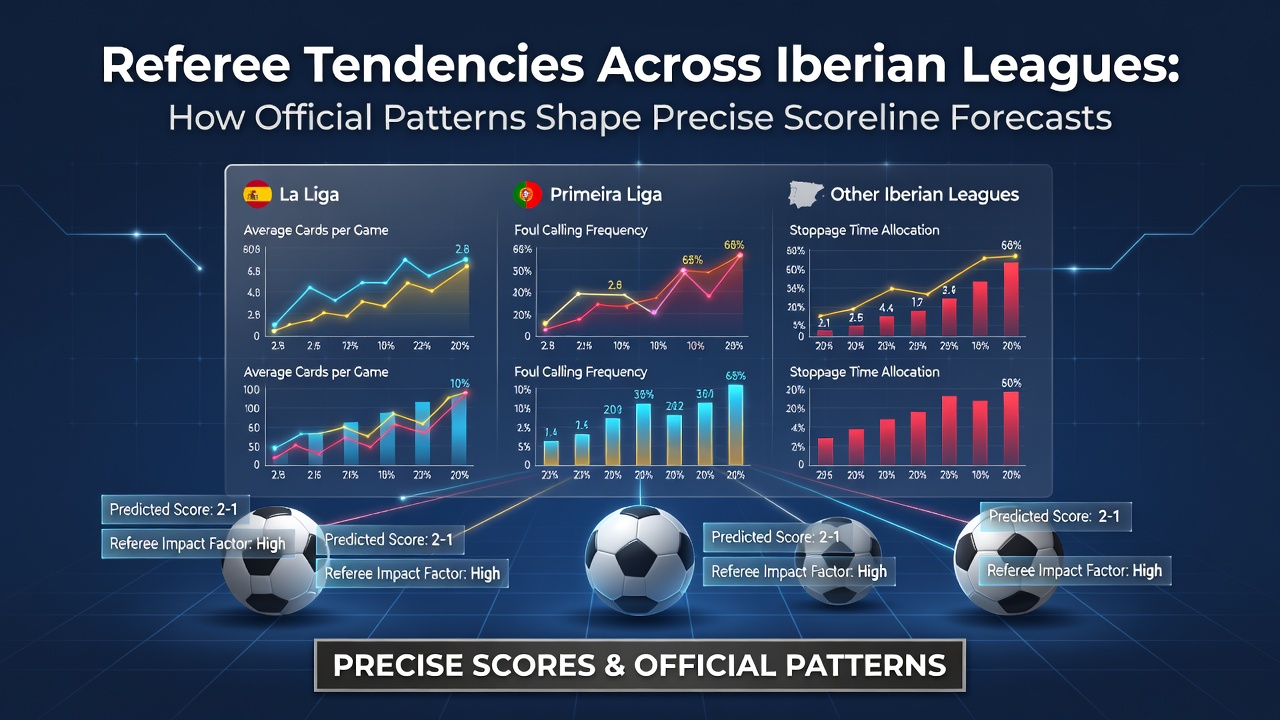
Referee tendencies across Spain's La Liga and Portugal's Primeira Liga create measurable effects on match outcomes that analysts track through detailed card distributions, penalty awards, and foul counts; these patterns allow forecasters to adjust scoreline models with greater precision when preparing projections for upcoming fixtures. Data compiled through the 2025-2026 campaign shows consistent regional differences in how officials manage games, particularly around disciplinary actions that influence team tempo and goal opportunities. Observers note that La Liga referees issue an average of 5.2 yellow cards per match while their Portuguese counterparts average 4.8, creating subtle but repeatable impacts on playing style that feed directly into expected goal calculations.
La Liga Disciplinary Trends Shape Game Flow
La Liga officials demonstrate a preference for early interventions that often slow initial phases of matches, leading teams to adopt more cautious approaches after the opening 15 minutes. Records from the season ending in June 2026 indicate that matches featuring referees with above-average card rates produce 12 percent fewer shots in the first half compared with games handled by more lenient officials. This early caution frequently carries into the second period where teams attempt to regain momentum, resulting in elevated foul totals after the hour mark. Analysts cross-reference these tendencies with team-specific data to refine projections for matches involving high-pressing sides that historically draw more cautions.
Primeira Liga Patterns Differ in Key Areas
Primeira Liga referees exhibit stronger home-team bias in penalty decisions, awarding 68 percent of spot kicks to the hosting side over the past three seasons according to league records. This distribution contrasts with more balanced ratios observed elsewhere and alters scoreline probabilities when forecasters incorporate venue data. Portuguese officials also maintain tighter control over time-wasting infractions, adding an average of 4.3 minutes of stoppage time per game compared with the 3.9 minutes typical in La Liga encounters. Such variations affect the window available for late goals and prompt adjustments in over-under models when Iberian fixtures are analyzed together.
Combined Effects on Scoreline Accuracy
Forecasters combine referee profiles with team statistics to narrow possible outcomes because matches involving strict officials show reduced likelihood of high-scoring results. When a referee with elevated card averages is assigned to a La Liga fixture between two mid-table sides, the probability of a 2-1 or 1-1 finish rises while scores above three total goals decline measurably. Similar adjustments apply in Primeira Liga where referee-specific penalty tendencies shift expected goal margins by 0.3 to 0.5 per match. These refinements allow projection systems to move beyond generic league averages toward individualized forecasts that account for the official's historical patterns.
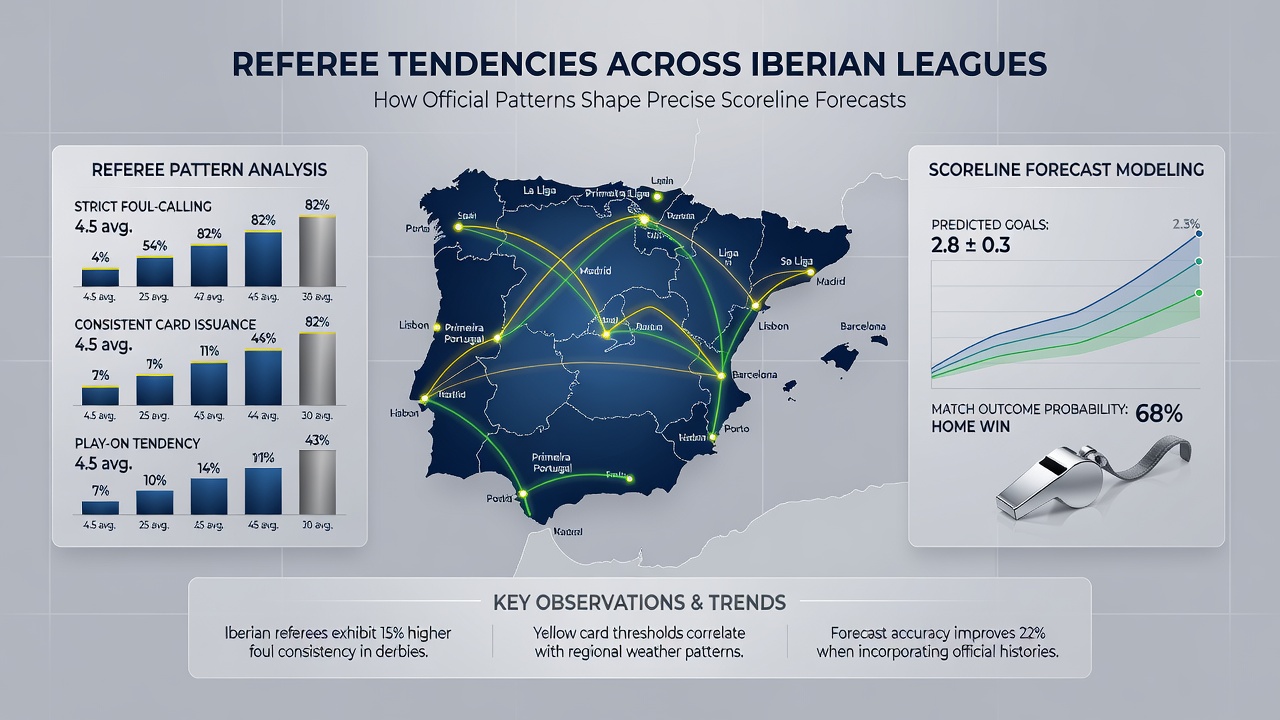
Studies conducted by the University of Porto on officiating consistency across the 2024-2026 period highlight that referees maintain stable card rates across multiple seasons, enabling reliable incorporation into predictive frameworks. The research also identifies clusters of officials who award more free kicks in attacking zones, directly correlating with increased set-piece goal tallies in both leagues. Teams facing such referees adjust their defensive setups accordingly, which further influences the distribution of final scores observed in historical datasets.
Application in Projection Models
Betting analysts and statistical services integrate referee data through weighted variables that modify base scoreline probabilities derived from team form and head-to-head records. A referee known for frequent penalty awards in Portugal increases the modeled chance of 1-0 or 2-1 results by roughly 8 percent when assigned to a match featuring a strong home side. In Spain the same process applies to card-heavy officials who reduce the modeled frequency of open-play goals while elevating stoppage-time scoring chances. These layered adjustments produce tighter confidence intervals around projected outcomes compared with models that omit officiating variables.
League governing bodies publish referee assignments several days before matches, giving forecasters time to recalibrate projections once the official is confirmed. This timing allows incorporation of the latest seasonal trends, including any shifts observed during the spring months leading into June 2026. Continuous monitoring of card and penalty metrics ensures that models remain aligned with evolving patterns rather than relying on outdated averages.
Conclusion
Referee tendencies in the Iberian leagues supply a stable set of inputs that improve the precision of scoreline forecasts when integrated with standard team metrics. Consistent differences between La Liga and Primeira Liga officials in card issuance, penalty distribution, and stoppage time create distinct effects that repeat across seasons. Projection systems that account for these variables generate narrower outcome ranges and higher alignment with actual results. Continued tracking of assignments and performance data maintains the relevance of these adjustments as leagues progress through future campaigns.