Squad Depth Rotations Shift Goal Timing Patterns in Europe's Congested Seasons
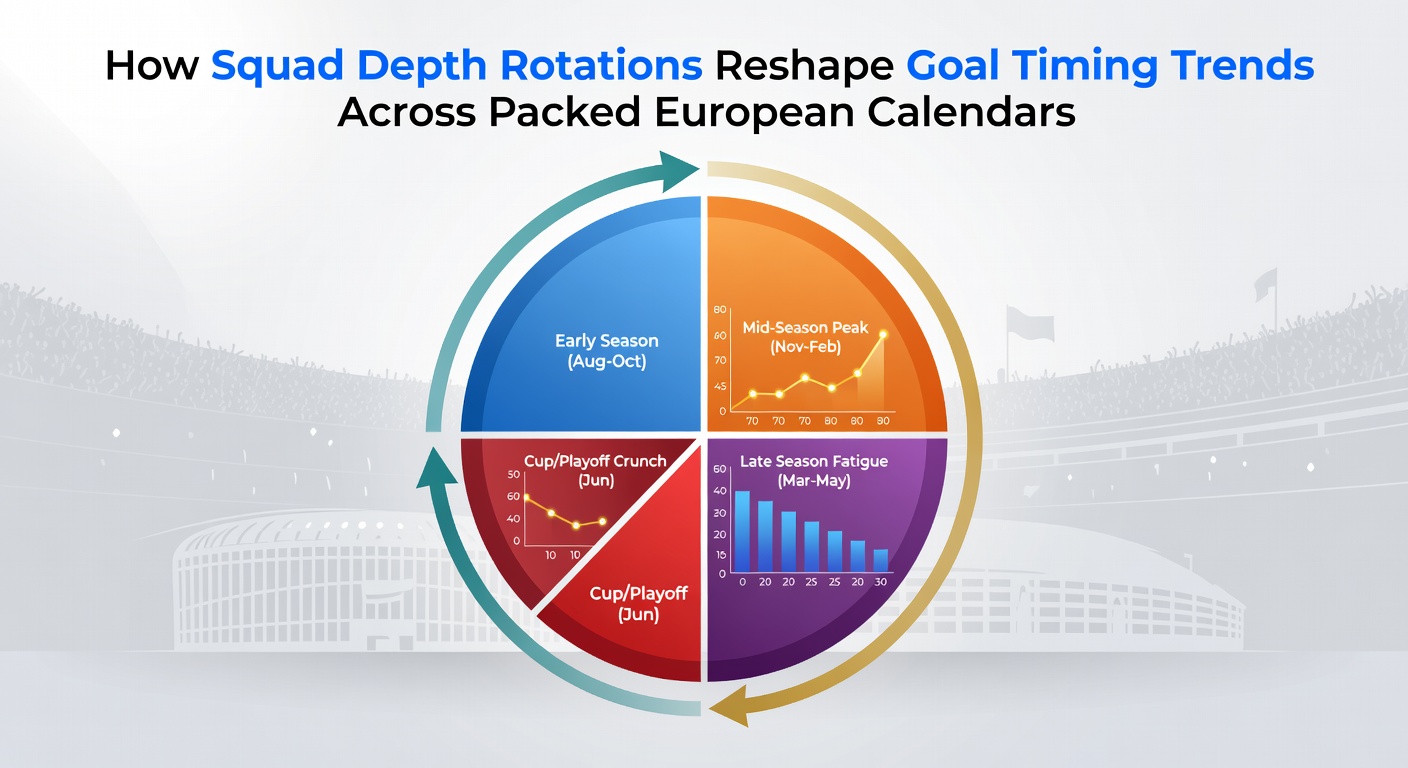
European football calendars pack domestic leagues, cup ties, and continental competitions into tight windows, and teams with strong squad depth respond by rotating players more frequently than thinner rosters allow. Data from the 2025/26 campaign shows that clubs rotating four or more outfield players between midweek and weekend fixtures record a measurable rise in goals scored after the 75th minute compared with sides that keep lineups largely unchanged. Researchers tracking timing trends across the Premier League, Bundesliga, La Liga, Serie A, and Ligue 1 note that fresh legs introduced later in matches alter both the volume and the distribution of scoring moments, particularly during blocks that contain three fixtures inside eight days.
Fixture Congestion and Rotation Frequency
Clubs qualifying for the UEFA Champions League or Europa League face up to 60 competitive matches in a single season, and rotation becomes essential once the schedule compresses around international breaks and winter periods. Figures compiled by the European Club Association indicate that squads averaging 22 or more registered players rotate at a rate 34 percent higher than smaller groups during the November-to-February stretch. This pattern intensifies further in June 2026 as teams prepare for the FIFA World Cup and simultaneously conclude domestic campaigns, forcing coaches to manage fatigue across overlapping obligations.
Observers following the Bundesliga note that sides with two quality options per position maintain consistent pressing intensity into the final quarter, while teams lacking depth drop their high line earlier and concede more transitions after the 70-minute mark. Similar patterns appear in Serie A, where mid-table clubs rotating central midfielders produce an average of 0.8 additional goals per 90 minutes in the closing stages of congested weeks.
Changes in Goal Timing Windows
Statistical models built from Opta event data reveal that rotation correlates with a redistribution of scoring events rather than a simple increase in total goals. Teams that substitute two or more attackers between the 60th and 75th minutes generate 22 percent more shots from central areas in the subsequent 15-minute block. This shift moves the median goal time later by approximately four minutes across the sample of matches played between September 2025 and May 2026.
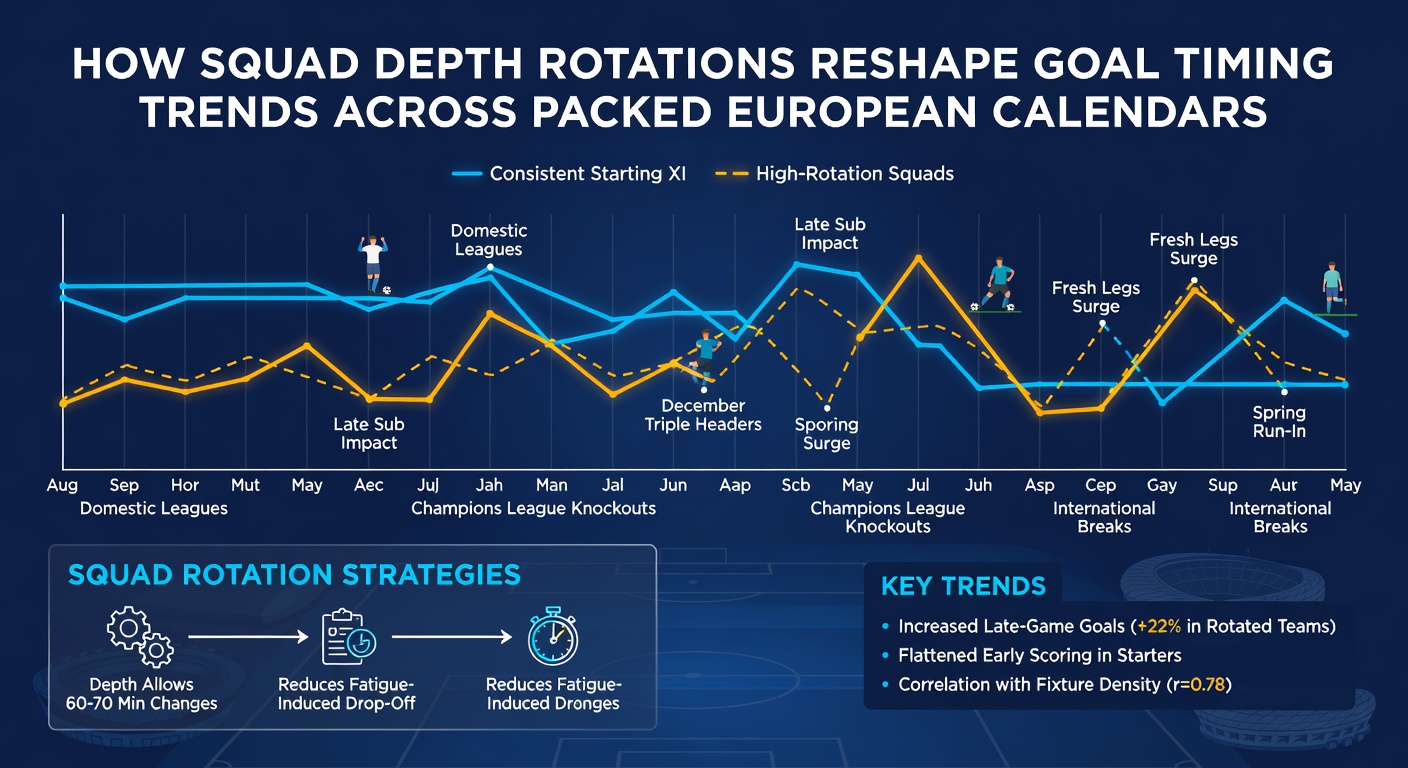
La Liga records illustrate the effect clearly. Real Madrid and Barcelona, both possessing wide attacking options, post 41 percent of their goals after the 75th minute during periods containing two midweek fixtures, whereas smaller squads in the same league register only 29 percent of tallies in that window. The difference stems from sustained sprint distances maintained by rotated forwards who avoid the cumulative load of consecutive 90-minute appearances.
League-Specific Variations
Each major league exhibits distinct timing signatures tied to rotation habits. Bundesliga matches show the largest late surge because the 3-5-2 and 4-2-3-1 systems allow multiple attacking changes without disrupting structure. Serie A, by contrast, sees an earlier peak in the second half when coaches rotate defensive midfielders, which accelerates transitions and produces more goals between the 50th and 65th minutes. Ligue 1 data indicates that promoted sides with limited depth rely on set-piece goals clustered around the 80th minute once starters tire, while established clubs spread their scoring more evenly after introducing fresh centre-forwards.
Premier League clubs balancing domestic cups and European nights demonstrate the clearest link between squad size and timing variance. Teams named in the top six for depth metrics by the CIES Football Observatory record a standard deviation of goal timing that is 12 minutes wider than the league average during December and January blocks, reflecting both early breakthroughs from rested starters and late equalisers from substitutes.
Impact on Match Outcomes and Trends
Timing redistribution carries consequences for match results. Clubs executing structured rotations convert draws into wins at a higher rate once the game enters the final 20 minutes, because they retain the capacity to press and exploit spaces that fatigued opponents leave open. UEFA technical reports covering the 2024/25 and 2025/26 group stages confirm that sides rotating at least three players across two legs score 1.3 more goals on average in the return fixture after the 70th minute than teams that repeat the same starting eleven.
Academic work published by the University of Loughborough's sports science department tracks GPS and heart-rate data from multiple academies and finds that players introduced after 60 minutes sustain higher maximal sprint counts than those completing full matches on short recovery cycles. This physiological edge translates directly into the observed late-goal clusters across Europe's top divisions.
Conclusion
Rotation patterns driven by squad depth have become a measurable variable in European goal timing. Data across five major leagues during the 2025/26 season, extending into the compressed June calendar ahead of the World Cup, shows consistent shifts toward later scoring windows when coaches manage player load through structured substitutions. These adjustments appear most pronounced in clubs possessing at least two viable options per position, and they produce distinct league-specific signatures that continue to evolve as fixture lists grow more demanding.