Tracking Travel Distances and Their Influence on Goal Line Markets in Worldwide Football Leagues
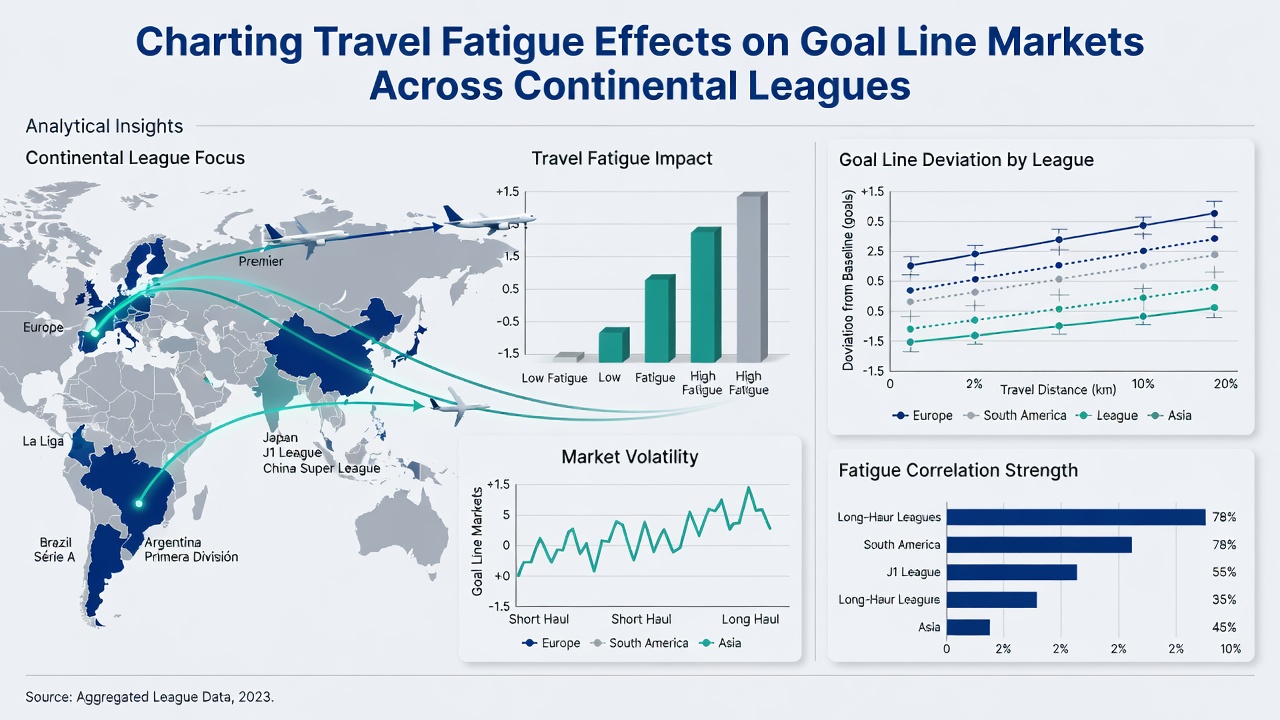
Teams covering thousands of kilometers between fixtures often exhibit measurable shifts in scoring patterns, and data analysts track these movements to refine goal line projections across leagues that span multiple time zones and climates. Researchers compile flight logs, recovery windows, and match outcomes to isolate variables that affect total goals, with particular attention paid to continental competitions where squads cross borders frequently during the season.
Patterns in European and South American Divisions
European leagues present shorter average travel legs within domestic schedules, yet cup ties and Champions League group stages force clubs into overnight flights that compress preparation time, while South American campaigns routinely involve multi-hour journeys across the Andes or across the continent for Copa Libertadores fixtures. Observers note that teams returning from away legs exceeding 2,000 kilometers record fewer goals on average in the subsequent domestic round, a trend visible in both the Brazilian Serie A and the Argentine Primera División where fixture congestion compounds the physical load.
Statistical models separate home and away performances after long-haul trips, revealing that the away side tends to produce lower scoring outputs while the rested home team maintains or slightly increases its expected goal totals. Analysts cross-reference GPS tracking data with official match reports to quantify how reduced high-intensity running minutes correlate with fewer shots on target and consequently fewer goals crossing the line.
North American and Asian League Comparisons
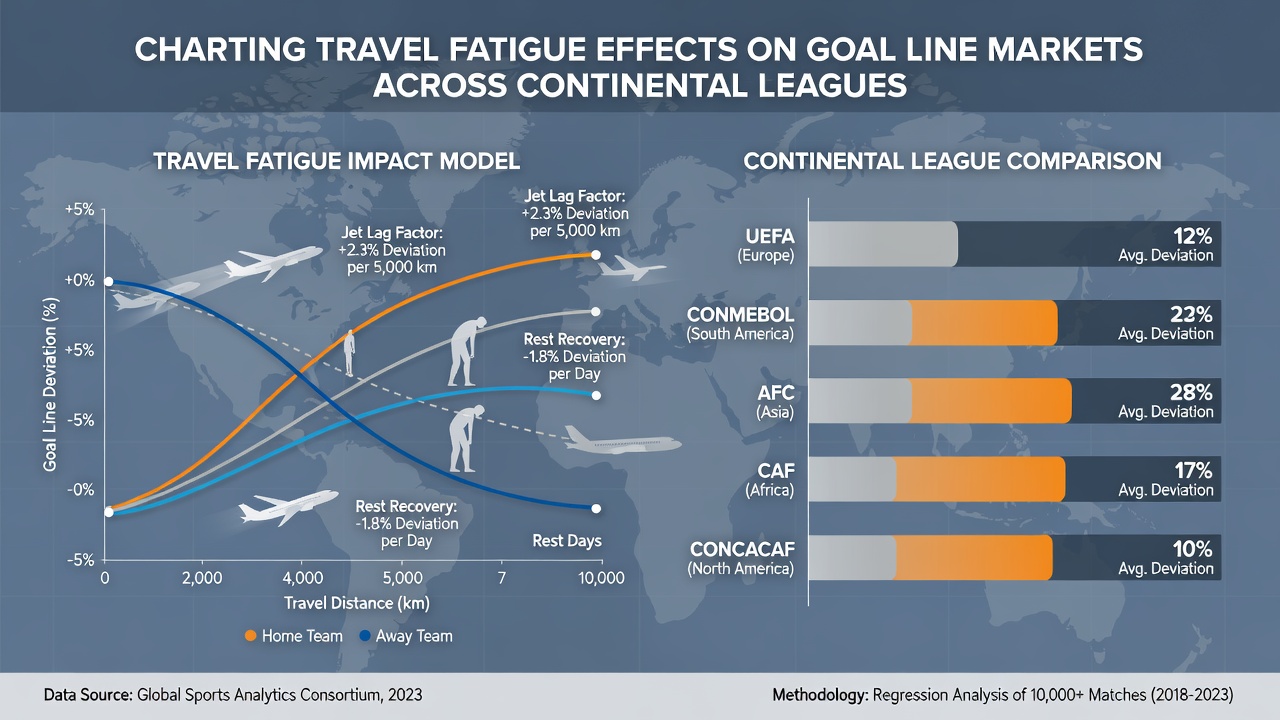
Major League Soccer schedules feature extensive cross-country flights that can exceed 4,000 kilometers in a single week, and performance databases show a measurable dip in total goals when teams play their next match within 48 hours of landing. Similar patterns appear in the J-League, where teams traveling from Hokkaido to Kyushu encounter comparable recovery challenges despite the shorter overall distances involved.
Academic studies compiled by the University of Queensland School of Human Movement and Nutrition Sciences examine circadian disruption and its downstream effects on sprint capacity, finding that athletes crossing more than three time zones display elevated fatigue markers that persist for up to 72 hours. These physiological measurements align with league-wide goal totals that trend lower when both participants have recent long-distance travel in their schedules.
Recovery Windows and Market Implications
Betting operators adjust goal line thresholds when published schedules indicate extended travel for one or both sides, and historical datasets confirm that matches featuring a team with fewer than three full rest days post-flight produce under 2.5 goals at higher frequencies than league averages. Midweek continental fixtures followed by weekend domestic rounds amplify this effect, particularly in leagues where squad rotation remains limited by squad depth or financial constraints.
League administrators in Australia and Canada have published fixture guidelines that incorporate minimum recovery periods after transcontinental travel, yet implementation varies and residual fatigue still registers in performance metrics tracked by sports science departments. Data from the Aspetar Orthopaedic and Sports Medicine Hospital supports the observation that muscle glycogen replenishment and sleep architecture require extended windows when travel includes multiple time-zone changes.
Seasonal Variations in July 2026
Pre-season tours and early July friendlies scheduled across continents in 2026 introduce additional data points for analysts monitoring goal line markets, as clubs return from training camps in Asia or North America ahead of domestic campaigns. Early-season fixtures often display suppressed scoring rates when squads have not fully acclimatized to home conditions after long-haul returns, a factor that persists into the opening matchweeks before stabilization occurs.
Conclusion
Comprehensive datasets now integrate travel metrics with traditional performance indicators, allowing clearer identification of matches where fatigue influences total goals across continental leagues. Continued collection of flight, recovery, and outcome statistics supports refined projections that account for these logistical variables without relying on subjective assessments of team motivation or style.